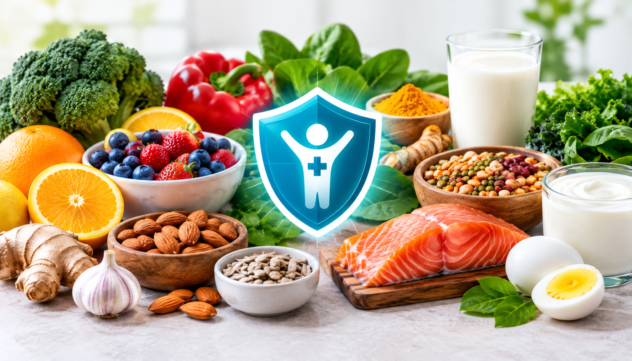
Nutrients rich foods that strengthens immunity play a big role in keeping your energy up, fighting infections, and staying healthy all year round. The billions of immune cells in your body depend on the right vitamins, minerals, and essential nutrients to work properly, so what you eat every day can make a real difference.
In this guide, you will learn how food helps boost your immune system, which foods research has found to be most effective, how to build a balanced diet plan for immune health, and some simple habits that work well for both men and women.
What Is Nutrition and Why Does It Matter for Immunity?
Nutrition means getting the nutrients your body needs to function, grow, and repair itself. For the immune system, this means a steady supply of vitamins A, C, D, and E, zinc, selenium, omega-3 fats, protein, and beneficial plant compounds.
When these nutrients run low, white blood cells, antibodies, and the body’s gut defenses can weaken. Many studies have repeatedly shown that people who eat a good-quality diet overall tend to have fewer respiratory infections, and milder ones when they do get sick. A 2022 review in Frontiers in Nutrition also states that nutrition is essential for building the strongest possible defense against viruses and bacteria.
Balanced Diet for Immune System: The Foundation
To keep your immune system strong, don’t rely on any single food. Eat a wide variety of foods instead. Keep these points in mind:
- Eat plenty of colorful fruits and vegetables every day.
- Include good-quality protein in most meals, such as fish, eggs, lentils, or meat.
- Get healthy fats from fish, nuts, and seeds.
- Eat fermented foods like yogurt to support your gut.
- Limit added sugar and packaged or ultra-processed foods.
Research repeatedly shows that a Mediterranean-style diet, which means eating mostly fresh, natural foods, helps support the immune system. It is also good for your heart and metabolism. That is why it is often considered one of the best answers to the question “What is the best diet for long-term health?” Nutrient-rich foods that strengthen immunity are at the heart of this way of eating
Top Nutrients Rich Foods That Strengthens Immunity
Here are the standout foods, grouped by the key nutrients they deliver.
Vitamin C Powerhouses
Main sources of vitamin C
- Oranges, grapefruit, lemons, red bell peppers, kiwi, strawberries, and broccoli are rich in vitamin C.
- Vitamin C helps the body make white blood cells and works as an antioxidant.
- A medium orange has about 70-90 mg of vitamin C, but red bell peppers have even more per serving.
- Research suggests vitamin C may slightly shorten the length of a cold, especially in people under heavy physical stress.
Zinc and Selenium Sources
- Oysters, lean beef, pumpkin seeds, and chickpeas contain zinc, which is important for T-cell development.
- Brazil nuts, tuna, and eggs contain selenium, which helps regulate the immune response.
- A 4-ounce serving of flank steak can provide more than half of the daily zinc requirement.
- Low zinc levels, especially in older adults, increase the risk of infection.
Omega-3 Fatty Fish
- Salmon, sardines, mackerel, and herring contain the omega-3 fats EPA and DHA, which help control inflammation.
- Mild inflammation that lasts for a long time can slowly weaken the immune system.
- Eating fatty fish twice a week is a simple goal that many health organizations recommend.
Probiotic and Fermented Foods
- Fermented foods such as yogurt with live cultures, kefir, kimchi, and sauerkraut support the helpful bacteria in the gut.
- A large part of the body’s immune system is said to be located in the gut.
- A recent clinical study found that eating kimchi regularly strengthens the immune system and also reduces excessive immune reactions.
- Plain yogurt or kefir with less than 8 grams of sugar per serving is a good everyday choice.
Antioxidant-Rich Berries and Leafy Greens
- Blueberries, blackberries, spinach, kale, and broccoli contain polyphenols, a vitamin A precursor (beta-carotene), and extra vitamin C.
- Some studies have linked the flavonoids in berries to a lower risk of colds.
- One study found that people who eat flavonoid-rich foods every day are about 33% less likely to catch a cold.
Other Supportive Foods
Garlic and onions (allicin and related compounds)
Eggs (protein, vitamin D, selenium)
Nuts and seeds (vitamin E, zinc, healthy fats)
Sweet potatoes and carrots (beta-carotene)
Mushrooms (beta-glucans and selenium)
Practical Ways to Eat More of These Foods
Ways to start simply
- Add some berries or seasonal fruit to your morning yogurt or oatmeal.
- Include at least one colorful vegetable at lunch and dinner.
- Eat fatty fish instead of meat twice a week.
- Keep an orange or red bell pepper within reach for a light snack.
A real-world example:
The plate method
- Fill half your plate with vegetables and fruit.
- Keep one quarter for protein, and the other quarter for starchy foods such as brown rice, flatbread , or potatoes and sweet potatoes.
- Many registered dietitians recommend this approach because it naturally increases immune-supporting nutrients without feeling strict.
What the Research Shows
Several reviews, including those from Cleveland Clinic, Prevention, and Medical News Today, say the same thing: no single food can prevent illness on its own. However, eating nutritious food regularly helps the body fight better when germs attack. Nutrient-rich foods that strengthen immunity are the best place to start.
Key findings:
- Having enough vitamin D lowers the risk of respiratory infections.
- A zinc deficiency can nearly double the risk of pneumonia in older adults.
- Eating fermented foods regularly helps keep communication between the gut and the immune system working well.
- For most healthy people, the overall quality of the diet is a better sign of good immune markers than any single supplement.
Lifestyle Factors That Multiply the Benefits
Research repeatedly shows that a Mediterranean-style diet, which means eating mostly fresh, natural foods, helps support the immune system. Nutrient-rich foods that strengthen immunity make up most of this diet, and it is also good for your heart and metabolism. That is why it is often considered one of the best answers to the question “What is the best diet for long-term health?”
Putting It All Together: A Sample Day
A sample day of eating
- Breakfast: Greek yogurt with blueberries, a handful of walnuts, and a few pumpkin seeds.
- Lunch: A large bowl of salad with spinach, red bell pepper, and chickpeas, topped with olive oil and lemon juice.
- Afternoon snack: An orange or a kiwi, with a few nuts.
- Dinner: Oven-baked salmon, steamed broccoli, and sweet potato.
- Optional: A small side of sauerkraut or kimchi.
Eating this way gives you a wide range of the nutrients your immune system needs, straight from everyday food.
Final Thoughts
Eating nutrient rich foods that strengthens immune system is one of the most evidence-based ways to build everyday resilience. Focus on variety, color, and consistency rather than perfection. Over weeks and months, these choices support energy, recovery, and overall well-being for men and women of all ages and activity levels. Making nutrients rich foods that strengthens immunity a regular part of your plate is a simple way to start.
If you have a medical condition, take medication, or have specific nutrition concerns, talk to a healthcare provider or registered dietitian for personal advice.