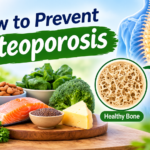
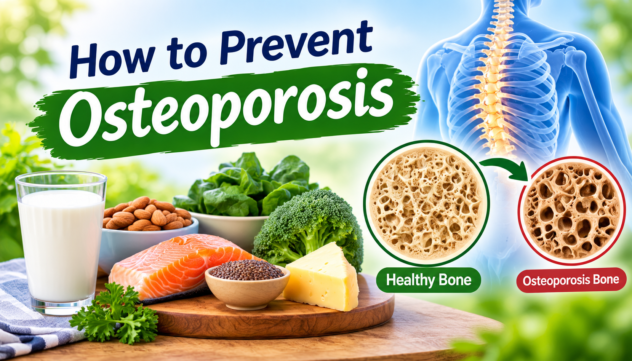
How to prevent osteoporosis is a question many people only ask after a broken bone, because osteoporosis often develops silently. The good news is that the steps to prevent osteoporosis are well established. Proper nutrition, regular exercise, and healthy lifestyle habits can protect your bones throughout your life. This guide is written for men and women of all ages in the United States.
Here you will find clear answers: what osteoporosis is, what causes it, how to recognize it, and how to prevent osteoporosis by following steps supported by leading health organizations.
What Is Osteoporosis Disease?
The word osteoporosis means “porous bone.” It is a condition in which bones lose density and strength, so they become fragile and can break from a minor fall or even a cough.
Your bones are living tissue. Throughout life, old bone is broken down and new bone is built. Until about age 30, your body builds bone faster than it loses it. After that, the rate of breakdown slowly overtakes the rate of rebuilding.
According to the Bone Health and Osteoporosis Foundation (BHOF), about 10 million Americans have osteoporosis, and roughly 44 million more have low bone density (osteopenia). Among people over 50, about one in two women and one in four men will break a bone because of osteoporosis.
Doctors diagnose it with a bone density test called a DXA scan. A T-score of -2.5 or lower confirms osteoporosis.
What Causes Osteoporosis?
Osteoporosis develops when bone is broken down faster than it is rebuilt. Once you understand the causes, you can manage the risks behind them and take steps to prevent or control osteoporosis.
Risks you cannot change
- Age: bone loss speeds up as you get older.
- Sex: women tend to have smaller, thinner bones.
- Family history: if a parent has broken a hip, your own risk is higher.
- Body frame: people with a small, thin build have less bone reserve to lose.
- Ethnicity: white and Asian women have a higher average risk, though anyone can develop osteoporosis.
Risks you can change
- Not getting enough calcium and vitamin D.
- Being physically inactive.
- Smoking and drinking too much alcohol.
- Being underweight or following extreme diets.
- Certain medicines, such as long-term use of oral corticosteroids.
- Some medical conditions, such as celiac disease, thyroid problems, and low testosterone in men.
Men are often overlooked, but this matters: after age 50, a man is more likely to break a hip because of osteoporosis than to be diagnosed with prostate cancer. Men also tend to have worse outcomes after a fracture.
Symptoms of Osteoporosis
In its early stages, osteoporosis usually has no symptoms, which is why it is called a silent disease. You cannot feel your bones getting thinner. Part of preventing complications is knowing the warning signs early.
As the condition progresses, watch for:
• A bone that breaks from a minor fall or bump.
• Loss of height over time.
• A stooped or rounded upper back (kyphosis).
• Sudden back pain, which can signal a compression fracture of the spine caused by a collapsed vertebra.
• Gums pulling away from the teeth.
Hip fractures are the most serious. Many older adults who break a hip never fully regain their previous independence.
How to Prevent Osteoporosis: 7 Evidence-Based Steps
No single habit protects your bones on its own. The strongest approach is to combine several. Here are the steps to prevent osteoporosis, one by one.
Get enough calcium
Calcium is the main mineral in bone. The National Institutes of Health recommends 1,000 mg of calcium a day for women aged 19 to 50 and men aged 19 to 70. Women over 50 and men over 70 need 1,200 mg a day.
Food comes first: dairy products, fortified plant-based milks, canned salmon with the bones, calcium-set tofu, kale. Use supplements only to fill a gap, since too much calcium can cause kidney stones.
Do not skip vitamin D
Vitamin D helps your body absorb calcium. Sources include fatty fish, egg yolks, fortified foods, and sunlight. Your body makes vitamin D when your skin is exposed to the sun every day.
Many Americans, especially those in northern states in winter, do not get enough vitamin D. Talk to your doctor before taking high-dose supplements.
Do weight-bearing and strength-training exercises
Walking, running, dancing, climbing stairs, and tennis are all weight-bearing exercises. Resistance training with weights or bands gives even more benefit.
Aim for at least 30 minutes of weight-bearing activity on most days of the week, plus strength training twice a week. Balance exercises such as tai chi also help lower the risk of falls.
Eat enough protein
About one third of your bone is made of protein. Include lean meat, fish, eggs, beans, or dairy in every meal. Fruits and vegetables supply potassium, magnesium, and vitamin K, all of which are linked to good bone health.
Quit smoking and limit alcohol
Smoking speeds up bone loss and slows the healing of fractures. Drinking heavily, meaning more than two drinks a day, raises the risk of fractures. For both men and women, these are among the easiest changes to make to help prevent osteoporosis.
Keep a healthy weight
Being underweight is a strong risk factor for bone loss. Crash diets and eating disorders can do lasting damage to bones, especially in teenagers and young adults.
Get screened on time
The US Preventive Services Task Force recommends a bone density test for all women aged 65 and older, and for younger postmenopausal women who are at higher risk. BHOF advises men to be screened from age 70, or earlier if they have risk factors. Catching the condition early is a key part of preventing fractures.
Bone building looks different at every stage of life.
Childhood and teen years
By ages 18 to 20, about 90 percent of your peak bone mass is already built. Active play, jumping sports, and calcium-rich foods during these years create a “bone bank” that pays off for decades.
Adults aged 20 to 40
Bone mass peaks at around age 30. Protect it by staying active, avoiding smoking, and eating a balanced diet. This is the best time to learn how to prevent osteoporosis, before any loss begins.
After menopause and after age 50
In the five to seven years after menopause, women can lose up to 20 percent of their bone density. Weight-bearing exercise, enough protein, calcium, and vitamin D matter even more now. Talk to your doctor about whether screening or medication makes sense for you.
Men over 50
Men lose bone more slowly but steadily. Strength training and vitamin D help. If symptoms point to a problem, it is also worth having testosterone levels checked.
A practical example: A landmark Tufts University study of postmenopausal women found that a year of high-intensity strength training twice a week maintained or improved hip and spine bone density, while women who did not exercise lost bone. Consistency mattered more than intensity.
Osteoporosis Treatment
If you already have osteoporosis or osteopenia and a high fracture risk, treatment can slow bone loss and lower the chance of breaking a bone. Treatment and prevention overlap, which is why the healthy habits above still matter.
Medicines
- Medicines prescribed by an orthopedist, along with physiotherapy: bone-loss-prevention drugs are the main way the condition is treated.
- Hormone-related therapy such as raloxifene: used for some postmenopausal women.
- Calcium and vitamin D: taken alongside treatment to support bone health.
Fall prevention
Fractures usually happen after a fall. Remove loose rugs, add grab bars, improve lighting, wear supportive shoes, and have your vision and medicines reviewed.
When Should You See a Doctor?
See your healthcare provider if you are a woman over 65, a man over 70, or younger with risk factors such as steroid use, early menopause, or a past fracture. Get care promptly for sudden back pain or noticeable loss of height.
Your doctor can order a DXA scan and check your vitamin D. Knowing how to prevent osteoporosis is a good start, but a personal assessment is what protects you.
Key takeaways
• Osteoporosis is common, silent, and largely preventable.
• Calcium, vitamin D, protein, and weight-bearing exercise are the foundation of how to prevent osteoporosis.
• Quit smoking, limit alcohol, and keep a healthy weight.
• Screening catches problems before a fracture.
• Effective treatment exists if bone loss has already occurred.
Frequently Asked Questions
How can I prevent osteoporosis naturally?
Focus on calcium-rich foods, enough vitamin D, daily weight-bearing exercise, and strength training. Avoid smoking and heavy drinking. Together, these are the natural foundation for preventing osteoporosis without medication.
Can osteoporosis be reversed?
Bone density can improve with treatment, exercise, and good nutrition, but fully reversing bone loss is rare. The goal is to stop further loss and prevent fractures.
At what age should you start worrying about osteoporosis?
Bone building starts in childhood, so prevention is for everyone. Formal screening usually begins at 65 for women and 70 for men, earlier if you have risk factors.
What foods are bad for bones?
Excess salt, heavy alcohol, and large amounts of caffeine or soda can contribute to calcium loss. These are not harmful in moderation when your calcium intake is adequate.
Can men get osteoporosis?
Yes. About one in four men over 50 will break a bone due to osteoporosis. Men should follow the same prevention steps and talk to a doctor about screening.