Congestive heart failure makes daily life harder. Congestive heart failure (CHF), often known simply as heart failure, can occur at any age, though the risk increases as people get older. It happens when the heart cannot pump enough blood to meet the body’s needs. Fluid then builds up in the lungs, legs, or other tissues, which is where the word “congestive” comes from. Millions of people around the world live with this condition, Spotting congestive heart failure symptoms early leads to better results.
According to recent Global Burden of Disease data, more than 55 million people worldwide have been affected by heart failure in recent years, and this number keeps rising as populations age. In the United States alone, about 6.7 million adults are affected. Knowing the symptoms of congestive heart failure helps patients and their families get medical care before the condition gets worse.
What is congestive Heart Failure?
Our bodies need a constant supply of blood, and the heart has to pump efficiently to meet that need. In congestive heart failure, the heart cannot pump enough blood to meet the body’s needs. This does not mean the heart has stopped working completely. Instead, the heart muscle has become weak or stiff (or both), so it cannot pump as much blood as the body requires. As a result, blood flow slows down and fluid builds up in different parts of the body. It collects most often in the lungs, legs causing swelling and shortness of breath. Over time, the condition can get worse, although treatment can help slow its progression and ease symptoms.
Common Symptoms of Congestive Heart Failure
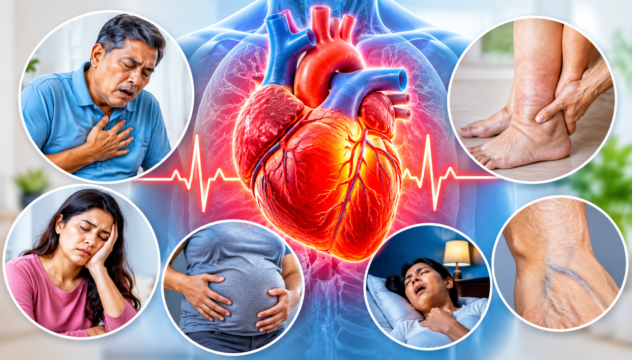
- Shortness of breath, especially during everyday activity or when lying down
- Needing extra pillows at night to breathe comfortably
- Waking up suddenly at night feeling breathless
- Fatigue and weakness, such as tiring easily when climbing stairs, carrying items, or walking
- Swelling in the feet, ankles, or abdomen
- Shoes feeling tight in the evening
- Rapid weight gain
- Fast or irregular heartbeat
- Reduced ability to exercise
- Loss of appetite
- Trouble concentrating
- A cough that may produce white or pink-tinged mucus
- Chest pain, if coronary artery disease is the underlying cause
These symptoms of congestive heart failure can develop slowly or appear more suddenly after a heart attack or other stress on the heart. They may come and go at first, which makes them easy to dismiss as “just getting older” or seasonal allergies.
Left-Sided Versus Right-Sided Symptoms
Left-sided heart failure more often produces lung-related problems: shortness of breath, coughing, and orthopnea (difficulty breathing while lying down). Right-sided failure tends to cause fluid buildup in the body—leg swelling, abdominal fullness, and enlarged liver. In reality, many patients eventually develop both sides affected, known as biventricular failure.
Causes of Heart Failure
The leading causes of heart failure include
- Coronary artery disease and previous heart attacks, which damage the heart muscle
- High blood pressure,
- Heart valve disease
- Cardiomyopathy
- Diabetes
- Certain infections
- Toxins, such as heavy alcohol use
Globally, ischemic heart disease accounts for roughly one-third of cases, followed by hypertensive heart disease. In some regions, rheumatic heart disease or congenital conditions play larger roles, especially in younger people. Obesity, smoking, and chronic kidney disease also raise risk significantly.
Congestive Heart Failure Stages
Doctors use two main systems to describe congestive heart failure stages. The American College of Cardiology/American Heart Association stages progress from A to D:
First system (Stages A to D):
- Stage A: High risk (high blood pressure, diabetes, obesity), but no heart damage or symptoms yet.
- Stage B: Changes in the heart’s structure, but still no symptoms.
- Stage C: Heart problem is present + symptoms (current or past).
- Stage D: Advanced stage. Symptoms severely limit daily life and need special treatment.
Second system (NYHA Classes): This focuses on how severe the symptoms are.
- Class I: No problem during normal activities.
- Class II: Mild symptoms with normal activities.
- Class III: Significant limitation; comfortable only at rest.
- Class IV: Symptoms even at rest.
Heart Failure Treatment Approaches
Key points of heart failure treatment:
- Main goals of treatment
- Relieve symptoms
- Slow the progression of the disease
- Improve survival
- Lifestyle changes (the most important foundation)
- Eat less salt (usually under 2,000 mg of sodium a day)
- Manage fluid intake as advised by your doctor
- Stay active with walking and exercise at a safe level
- Quit smoking completely
- Maintain a healthy weight
- Medicines (the main treatment for most patients)
- ACE inhibitors, ARBs, or ARNI
- Beta-blockers
- Mineralocorticoid receptor antagonists
- SGLT2 inhibitors (even for people without diabetes)
- Devices (for selected patients)
- ICD (implantable cardioverter-defibrillator)
- CRT (cardiac resynchronization therapy)
- Advanced stage (stage D)
- LVAD (left ventricular assist device)
- Heart transplant at a specialized hospital
- Cardiac rehabilitation
- Teaches patients the training and practical skills to manage daily life well
A practical case: Many people who once needed frequent hospital stays for fluid overload now remain stable for years with a combination of four foundational medicines, daily weighing, and prompt reporting of a three-to-five-pound gain. Early treatment of the underlying causes of heart failure—such as controlling blood pressure or opening blocked arteries—also changes the trajectory.
When to Seek Medical Help
If your breathing gets worse, you gain weight quickly, your swelling increases, or you feel more tired than usual, don’t wait. Call your doctor today. If you can’t catch your breath while resting, cough up pink, foamy mucus, have chest pain, or faint, call 911. These signs mean fluid may be building up dangerously in the lungs, and every minute counts.
Living Well and Looking Ahead
Many people with heart failure continue to lead active, meaningful lives. A combination of lifestyle changes, medication, and regular medical checkups helps most patients. Those who take an active role in their care plan tend to have a better quality of life. Research continues to expand treatment options, including newer therapies for heart failure with preserved ejection fraction, a type that was once difficult to treat.
If you or a loved one notice possible symptoms of congestive heart failure, start a conversation with a health care professional. An initial evaluation often includes an echocardiogram, blood tests, and a careful review of risk factors. Knowledge and timely action are still the two most powerful tools.
Frequently Asked Questions
What are the earliest symptoms of congestive heart failure?
In the beginning, mild shortness of breath usually occurs during walking or physical activity, along with unusual tiredness and slight swelling in the ankles. Many people notice that they need more pillows than before to sleep comfortably.