
Magnesium is an essential mineral that the body needs. Magnesium for sleep and anxiety is a popular natural option for people looking to calm the mind and improve rest. Many search for answers to questions like does magnesium help you sleep, best magnesium for anxiety, best magnesium for sleep, best time to take magnesium, and benefits of taking magnesium at night. Here’s a clear, evidence-based look at what research and clinical experience show.
How Magnesium Supports Sleep and Anxiety Relief
Magnesium plays an important role in nervous system function, muscle relaxation, and stress response. The human body stores about 25 grams of magnesium, mostly in the bones and cells. It helps maintain healthy cortisol levels and may support melatonin production. Low magnesium intake is common and can lead to restlessness, muscle tension, difficulty sleeping, and feelings of anxiety.
When magnesium levels are adequate, it promotes better relaxation and restful sleep — which is why magnesium for sleep and magnesium for nighttime anxiety are often discussed together.
Does Magnesium Help You Sleep?
Yes, for many people—especially those with mild sleep issues or a slight magnesium deficiency. Research has shown that taking extra magnesium can improve sleep onset, sleep quality scores, sleep efficiency, and overall feelings of rest. The benefits are generally mild and become more noticeable after 2–4 weeks of consistent use.
Magnesium is not a powerful sedative. It works by supporting the body’s natural calming processes rather than forcing sleep. People who are deficient in magnesium or experiencing high levels of stress notice the greatest improvements in falling asleep quickly and staying asleep.
Magnesium for Anxiety and Nighttime Calm
Research suggests magnesium can help with mild anxiety symptoms by calming the nervous system and reducing the physiological stress response. Forms that combine magnesium with calming amino acids are especially popular for this purpose.
Anar Allidina, M.P.H., R.D. ,She is a Canadian Registered Dietitian.
She says: “Magnesium supports healthy sleep by calming the nervous system. It activates the parasympathetic (‘rest-and-digest’) nervous system.”
Many users report that magnesium helps with racing thoughts at night and makes it easier to unwind. While it is not a replacement for professional treatment of clinical anxiety, it can be a useful supportive tool when combined with good sleep habits.
Best Magnesium for Sleep and Best Magnesium for Anxiety
Not all forms work the same. Absorption, tolerability, and effects differ:
Magnesium glycinate is widely considered one of the best options for both sleep and anxiety. It is gentle on the stomach, well-absorbed, and the glycine component adds extra calming benefits. Many people choose magnesium glycinate for sleep and anxiety because it promotes relaxation without strong digestive side effects.
Anar Allidina, M.P.H., R.D. specifically recommends Magnesium Glycinate as one of the best forms for people who have trouble falling or staying asleep, as well as for anxiety and stress-related sleep issues.
Lisa Moskovitz, RD, CDN ,She is a New York-based Registered Dietitian.
She shares that when she takes magnesium at night, she feels more rested and experiences better sleep quality. She also advises choosing the right form of magnesium based on your specific goal — recommending Magnesium Glycinate for sleep support.
Magnesium L-threonate is another strong option, especially for improving sleep quality and brain-related relaxation. It crosses the blood-brain barrier more effectively than most other forms, and some studies have shown benefits for deep sleep stages and better daytime performance.
Magnesium citrate is better absorbed than magnesium oxide, but it has a laxative effect and can cause loose stools. For this reason, it is generally not ideal as a regular nighttime sleep aid — unless constipation is also a concern.
Magnesium oxide is the cheapest form, but it is poorly absorbed by the body and more likely to cause stomach upset.
For most people seeking magnesium for restful sleep and calm, magnesium glycinate or L-threonate are preferred starting points.
Best Time to Take Magnesium
You can take magnesium any time of day, and consistency matters more than exact timing. However, for sleep support, the best time to take magnesium is usually 30–120 minutes before bed.
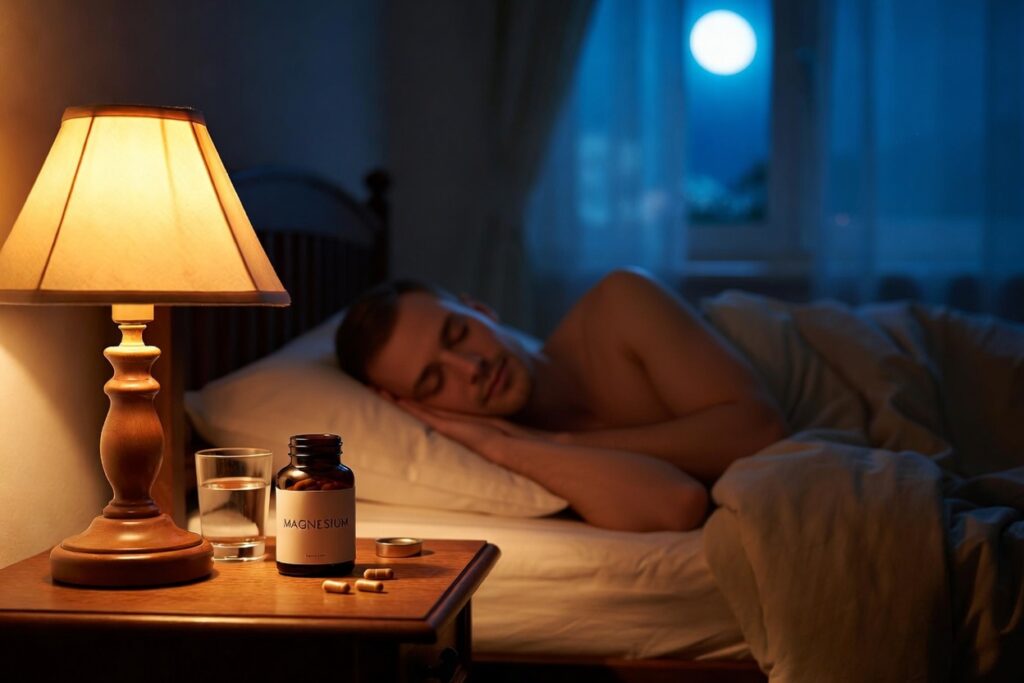
Benefits of taking magnesium at night include:
- Enhanced muscle relaxation
- Helps create a calm mental state that supports falling asleep
- Potential support for natural melatonin signaling
- Reduces physical tension that can interfere with rest
- Helps reduce nighttime anxiety and racing thoughts, promoting mental calmness
If daytime anxiety is the main concern, some people prefer morning or split dosing. For pure sleep and evening calm, nighttime dosing aligns well with the body’s wind-down process.
Dosage, Safety, and Practical Tips
Typical supplemental doses used for sleep and mood range from 200–400 mg of elemental magnesium. Stay at or below the upper limit of 350 mg from supplements for adults unless advised otherwise by a healthcare provider. Start low and increase gradually to assess tolerance.
Magnesium from food (pumpkin seeds, almonds, spinach, black beans, chia seeds, etc.) is safe and contributes to overall intake. High doses from supplements can cause diarrhea or stomach discomfort. People with kidney problems, heart problems should avoid magnesium supplements unless supervised medically.
If you are pregnant, breastfeeding, or taking any other medications, please consult your doctor first. Too much magnesium can upset the digestive system, causing nausea, vomiting, or diarrhea.
Magnesium can also interact with certain medications, so check with a doctor or pharmacist.
Final Thoughts
Magnesium for sleep and anxiety offers a low-risk, research-supported option for many people dealing with mild symptoms. Magnesium glycinate for sleep and anxiety stands out as a well-tolerated choice, while L-threonate may appeal to those focused on sleep quality and brain calm. Taking magnesium at night can enhance its relaxing effects, and consistent daily use is key to seeing benefits.
Results vary. Magnesium works best as part of a broader approach that includes good sleep hygiene, stress management, and a nutrient-rich diet. Always consult a healthcare professional before starting any new supplement, especially if you have health conditions or take medications.
With the right form, sensible timing, and realistic expectations, magnesium can be a helpful addition for better sleep and greater calm.