Understanding the benefits of omega-3 starts with knowing that this healthy fat is one our body cannot make on its own, so we must get it from food. It keeps the heart healthy, supports brain function, and helps reduce inflammation in the body. Yet many people do not get enough omega-3 in their daily diet. Knowing its benefits makes it easier to choose better eating habits for yourself and your family.
What Is Omega 3?
Omega-3 is a healthy fat that our body cannot make on its own, so we have to get it from food or supplements. It helps build the walls of our cells, especially in the brain, eyes, and heart. It also helps keep inflammation and blood clotting under control.
Omega-3 is different from many other fats because it is essential for the body. When people of all ages, men and women alike, get enough of it, their overall health stays better.
What Are the Three Types of Omega-3?
There are three types of omega-3, explained simply in points:
- ALA (alpha-linolenic acid): This mainly comes from plants such as walnuts, flaxseed, and chia seeds. The body can convert only a very small portion of it (less than about 15%) into EPA and DHA.
- EPA (eicosapentaenoic acid): This mainly comes from marine sources, such as oily fish. It plays a big role in reducing inflammation and keeping the heart healthy.
- DHA (docosahexaenoic acid): This also mainly comes from marine sources. It is very important for the development of the brain and eyes, and for keeping the brain working well.
In short, EPA and DHA are the forms most strongly linked to health benefits in research. However, ALA also contributes, especially for people whose diet includes a lot of plant foods.
What Foods Are High in Omega 3?
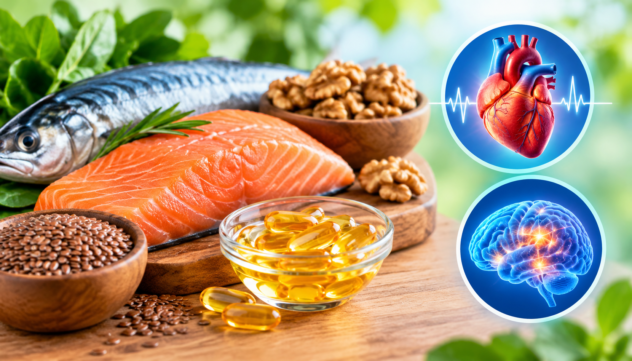
EPA and DHA, the two healthy types of omega-3 fat, are found most richly in oily fish. Plant-based foods usually contain a different type of omega-3 called ALA.
Good sources include:
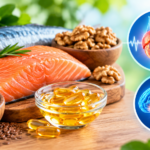
- Salmon, mackerel, herring, sardines and anchovies. These contain plenty of EPA and DHA.
- Flaxseeds and flaxseed oil. These are very high in ALA.
- Chia seeds, which contain a good amount of ALA.
- Walnuts, another good source of ALA.
- For people who do not eat fish, oil made from algae or foods fortified with that oil, which provide plant-based EPA and DHA.
- Tofu, a popular plant-based protein source, also contains ALA omega-3 fatty acids.
The American Heart Association recommends eating fish at least twice a week, especially oily fish. This helps most adults get a good base level of EPA and DHA.
If mild inflammation continues in the body for a long time, it can lead to many common diseases. Omega-3s called EPA and DHA help reduce this inflammation in a few ways.
First, there is another type of fat called omega-6, which is very common in Western-style diets. When there is more omega-3 in the body, fewer inflammation-promoting substances are made. Instead, more of certain special substances called resolvins, protectins and maresins are made. These do not just stop inflammation, they also actively help clear it away.
Second, EPA and DHA reduce the activity of a signaling protein called NF-κB, which tells the body to start inflammation. At the same time, the production of some inflammation-causing chemicals called cytokines also goes down.
Studies on rheumatoid arthritis (a joint disease caused by inflammation) have found that when people consume enough marine-source omega-3, there are clear improvements in symptoms and in test markers.
In short, omega-3 weakens the pathways that increase inflammation and strengthens the pathways that resolve it.
Key Omega 3 Benefits Backed by Research
Heart health
Large studies that combined the results of many trials have found that people who take in more EPA and DHA have a somewhat lower risk of some heart-related problems. One such analysis combined 40 trials with data from about 135,000 people. It found that the risk of heart attack was about 13% lower. The risk of other heart disease events and of dying from a heart attack was also lower. The text says triglycerides (a type of fat in the blood) drop by about 15%, but I could not verify that figure in these sources.
A separate trial called REDUCE-IT enrolled patients who had a high risk of heart disease and still had high triglycerides even though they were taking statin medicine. They were given 4 grams a day of a purified EPA medicine (icosapent ethyl), and this led to clearly fewer heart disease events. This is a prescription medicine, not the same as ordinary fish oil capsules. In this trial, people taking the medicine had a somewhat higher risk of atrial fibrillation (an irregular heartbeat) and bleeding. So it is better not to start a high dose on your own, and to talk to a doctor first.
Brain and cognitive support
A large part of the fat in the brain is made of DHA. The outer covering of brain cells is called a membrane. When there is enough DHA, this membrane can work properly, and the cells can pass signals to each other more easily.
As people get older, their ability to remember, think and pay attention slowly declines a little. Getting enough DHA may help keep that ability going for longer.
Some studies have also found that people with good omega-3 levels in their body tend to have a better mood. But this is only a link. It does not mean that eating omega-3 will cure low mood or depression.
Eye health
DHA is concentrated in the retina. Getting enough supports visual development in infants and may help maintain eye health later in life.
Other areas
Omega-3 may play a role in joint comfort, in keeping the body’s metabolism (the process of making energy from food) healthy, and in a healthy pregnancy, and research on these is still ongoing. Extra DHA is often recommended during pregnancy and while breastfeeding.
However, the results of all studies are not the same. This is because the results change depending on how much people took, what their own health condition was, and how the study was designed. So the benefit is clearest when intake is regular and adequate.
Real-world example: People who regularly eat fatty fish two or more times per week tend to show better blood lipid profiles and lower markers of systemic inflammation compared with those who rarely eat seafood. Large observational data also link higher blood levels of EPA and DHA with lower long-term cardiovascular risk.
How Much Omega-3 Do You Need?
In the United States, there is no single government-set amount for EPA and DHA. However, there are some practical targets.
According to the US National Institutes of Health (NIH), 1.6 grams a day for men and 1.1 grams a day for women is considered adequate for plant-based omega-3 (ALA).
For general health, many experts suggest taking at least 250 to 500 milligrams a day of EPA and DHA combined. In some special conditions, such as high triglycerides, 1 to 4 grams a day is given under a doctor’s supervision.
Most Americans do not get this amount. Eating fish twice a week, or taking a good quality supplement, can close this gap. If you buy a supplement, choose a well-known brand that tests for purity, especially for heavy metals such as mercury.
Practical Tips for Getting More Omega-3
You can grill, bake or pan-cook salmon or mackerel a few times a week.
Sprinkle ground flaxseed or chia seeds on yogurt, oatmeal or salads.
Eat a handful of walnuts as a snack.
If you do not regularly eat fish or seafood, you could think about an algae-based or fish oil supplement.
Where possible, eat less packaged and heavily processed food. These foods are high in omega-6, so cutting back helps balance your diet.
These small steps make it easy to get the benefits of omega-3 without making big changes to your lifestyle.
Omega-3 is not a magic cure. But when you get enough of it, the evidence is fairly strong that it helps keep the heart healthy, reduces inflammation, and supports the brain and eyes. Making these foods part of a regular habit gives most healthy adults the best results.
Frequently Asked Questions
What is the best way to get omega-3 benefits?
Eating fatty fish twice a week is ideal. Plant sources supply ALA, while fish or algae provide the more bioactive EPA and DHA.
Can omega-3 supplements replace eating fish?
If you do not get enough EPA and DHA from food, supplements can effectively raise their levels in your blood. But food also provides other nutrients, so a mix of both is often best.
How long does it take to notice omega-3 benefits?
Signs of lower triglycerides (a type of fat in the blood) can show up within a few weeks to a few months. But bigger benefits, such as for the heart and for reducing inflammation, do not come in a single day. They usually build up slowly when you keep taking it regularly over a long time.
Are there any side effects of high omega-3 intake?
Side effects are very rare when you get omega-3 from ordinary food or take a moderate dose of a supplement.At very high doses, the risk of bleeding may go up a little for some people, and mild stomach discomfort can also happen. If you take blood-thinning medicine, or you have any other health problem, talk to a doctor before you start a supplement.
Do plant-based sources provide the same omega-3 benefits as fish?
Omega-3 from plants is ALA. The body can change it into EPA and DHA, but only in very small amounts, so it does not work very well for that.For people who do not eat fish, oil made from algae is a good option. It gives EPA and DHA directly, and it is fully plant-based.