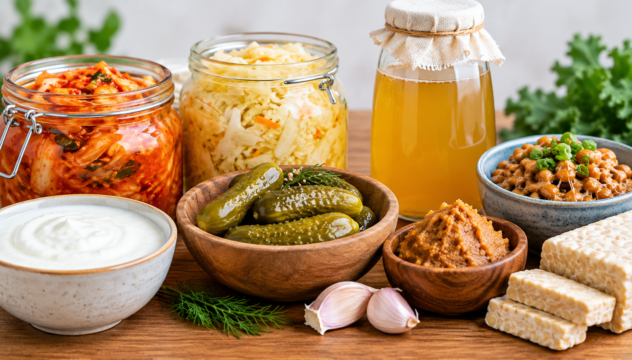
Fermented foods for gut health is one of the easiest and best-researched ways to support your digestion. These traditional foods contain live beneficial microbes, helpful natural compounds, and fiber. Together, they support your gut microbiome, the community of trillions of bacteria living in your digestive tract.
If you sometimes have bloating or irregular digestion, or you simply want to keep your gut healthy in the long run, adding the right fermented foods to your diet can make a real difference. This guide covers what fermented foods are, how they support the bacteria in your gut, the best choices (such as fermented vegetables, probiotic foods, and the foods with the highest probiotic content), a simple fermented foods list, and how to start eating them safely.
What Are Fermented Foods?
Food becomes fermented when tiny microbes break down its sugars and starches. This work is mostly done by lactic acid bacteria, yeasts, or certain molds. During the process, lactic acid, other organic acids, enzymes, and vitamins are produced, and sometimes alcohol or carbon dioxide as well. As a result, the food gets a tangy taste, stays fresh for longer, and often contains more beneficial compounds.
Familiar examples include yogurt, kefir, sauerkraut, kimchi, miso, tempeh, and kombucha. However, not every fermented food still has live microbes by the time you eat it. Heating, pasteurizing, or baking can kill the bacteria. If you want the gut benefits of live microbes, choose products labeled “live and active cultures” or “naturally fermented” that are kept refrigerated and have not been pasteurized.
How Fermented Food and Gut Bacteria Health Are Connected
Your gut microbiome affects digestion, immunity, inflammation, and even mood, through the gut-brain axis. A diverse, balanced microbiome is generally linked to better health outcomes, and fermented foods can support it in several ways.
Fermented foods for gut health bring in live microbes that can temporarily increase microbial diversity or interact with the bacteria already living in your gut. They also supply by-products of fermentation, such as short-chain fatty acids (SCFAs), bioactive peptides, and exopolysaccharides. These compounds help strengthen the intestinal barrier, reduce inflammation, and support helpful native bacteria.
A well-known Stanford University study found that people who ate six or more servings of fermented foods a day for 10 weeks had greater gut microbiome diversity and lower levels of 19 inflammatory proteins. A high-fiber diet alone did not produce the same anti-inflammatory effect in that time.
A 2025 systematic review and meta-analysis of 25 studies (19 of them randomized controlled trials, with 4,328 participants) found that eating fermented foods improved how often people had bowel movements, stool consistency (measured on the Bristol Stool Form Scale), digestive symptoms, and gut transit time. Benefits were also seen for bloating, hard stools, and the severity of constipation, though the certainty of the evidence varied.
These findings fit with wider research showing that fermented foods can increase microbial diversity, support the gut barrier through tight-junction proteins, and help regulate immune responses.
Fermented Vegetables Probiotics and Their Unique Benefits
Fermented vegetables like sauerkraut, kimchi, and brined pickles are a good natural source of probiotics and prebiotic fiber. During fermentation, lactic acid bacteria (such as Lactobacillus plantarum and Leuconostoc) multiply and produce organic acids. These acids lower the pH, so many harmful germs cannot survive there.
These foods give you two things at once: live beneficial microbes, and fiber that feeds the good bacteria in your gut. Kimchi, for example, contains cabbage, radish, garlic, ginger, and chili, which provide a variety of microbes, polyphenols, and vitamins. Unpasteurized sauerkraut offers vitamin C, fiber, and bacteria that help digestion and keep harmful germs in check.
Another benefit of fermented vegetables is that they are usually low in calories and full of flavor, so they are easy to add to meals as a side dish or topping. When buying, avoid canned products stored on the shelf, since they are usually heat-processed and have no live cultures. Choose refrigerated products from the produce or specialty section instead.
Foods with Highest Probiotics
When ranked by typical colony-forming units (CFU) and microbial diversity, certain fermented foods stand out for gut health:
Fermented foods for gut health: kefir is often at the top of the list. This fermented milk drink is made with kefir grains and can hold dozens of bacteria and yeast strains. Homemade versions can have even higher counts, while store-bought ones usually give billions of CFU per serving. The milk also helps shield the microbes as they travel through your digestive system.
Fermented foods for gut health: yogurt with live and active cultures is the most studied choice. Pick plain yogurt that lists Lactobacillus bulgaricus and Streptococcus thermophilus, and often added L. acidophilus or Bifidobacterium
Unpasteurized sauerkraut and kimchi lead the plant-based options. When properly fermented and kept cold, they usually give hundreds of millions to billions of CFU per serving.
Natto, which is soybeans fermented with Bacillus subtilis, supplies tough, spore-forming bacteria that survive digestion well. It also gives you vitamin K2 and nattokinase.
Miso (especially unpasteurized) and some aged cheeses also add live cultures, as long as they are not overheated.
Kombucha provides organic acids and a mix of live microbes, but the amount varies a lot between brands. Always check the label and storage instructions, since keeping it in the fridge helps preserve its quality.
Fermented Foods List: Practical Options for Everyday Eating
Here is a practical list of fermented foods that are easy to find and suitable for most healthy adults.
- Plain yogurt or Greek yogurt with live cultures. Check the label for “live and active cultures” and skip the sweetened ones.
- Kefir, either milk-based or water-based. It is a drinkable option with a wide mix of microbes.
- Sauerkraut, the refrigerated, unpasteurized kind. Shelf-stable jars are usually heat-treated, so the cultures are gone.
- Kimchi. It is spicy and tangy, and works well as a side or in rice and noodle dishes.
- Miso paste. Stir it into warm food, but not boiling, because high heat kills the live cultures. It is also quite salty, so a small spoonful is enough.
- Tempeh. This is a firm block of fermented soybeans. It is a good protein source, but cook it before eating.
- Natto. It has a strong smell and sticky texture, but it carries hardy bacteria and vitamin K2.
- Traditional salt-brine pickles. Make sure they are fermented in salt water, not just soaked in vinegar, because vinegar pickles have no live cultures.
- Kombucha. Pick a low-sugar one and keep it in the fridge.
- Some aged cheeses (cheddar, gouda, Swiss) and cultured buttermilk. These can add some live cultures, though the amount is usually lower than in yogurt or kefir.
Start with one or two servings a day and slowly increase. Going too fast can cause gas or bloating at first. Also eat these foods together with prebiotic fiber, such as onions, garlic, bananas, oats, and asparagus, so the good microbes have something to feed on.
A few extra tips:
- Many fermented foods are high in salt, so keep an eye on portions if you watch your sodium.
- Keep the products cold and use clean utensils to avoid spoilage.
- If you are pregnant, have a weak immune system, or have a medical condition, check with your doctor before adding large amounts of fermented foods.
How to Add Fermented Foods Safely and Effectively
Start slowly, especially if your stomach is sensitive. This gives your gut bacteria time to adjust and keeps temporary gas or bloating to a minimum. Try to eat a variety of fermented foods instead of relying on just one kind. Eating them regularly matters more than being perfect, and after a few weeks of steady intake you can usually notice real changes.
Some people should talk to a doctor or other healthcare provider first. This includes people with histamine intolerance, a weak immune system, or those who take certain medicines, such as MAOIs, which do not mix well with foods high in tyramine. If you have high blood pressure, keep an eye on the salt in kimchi, sauerkraut, and miso.
Making fermented foods at home is possible and rewarding, but food safety comes first. Use clean tools, measure the salt correctly, and keep the vegetables under the brine so they stay away from air.
Real-World Results and Research Context
Beyond the Stanford study and the 2025 meta-analysis, large population studies link regular intake of yogurt and other fermented foods with better metabolic markers and a lower risk of some health conditions. Researchers think this happens in a few ways. Fermented foods make nutrients easier for the body to absorb. Some of them are lower in FODMAPs, which are the carbs that can upset the gut. The good microbes also compete with harmful germs. And they produce helpful compounds that can reach other parts of the body, not just the gut.
How people respond is different for everyone. It depends on the gut bacteria you start with, your diet, your genes, and your lifestyle. Fermented foods are not a cure-all, but they are a low-risk, food-first approach, and a growing body of evidence supports them.
Frequently Asked Questions
What are the best fermented foods for beginners?
The easiest places to start are plain yogurt and kefir with live cultures. They taste mild, are easy to find, and are well studied.Once your stomach is comfortable with those, try adding a spoonful of sauerkraut or kimchi to a meal. Start small and slowly eat a little more over time.