If you feel bloated after every meal, get unexplained recurring breakouts, or feel tired even after eating well, then you should definitely learn about leaky gut, and how to cure leaky gut naturally.
This guide explains what leaky gut actually is, what causes it, how to recognize it, and — most importantly — how to cure leaky gut naturally through diet, lifestyle, and habits, based on real research.
What Is Leaky Gut?
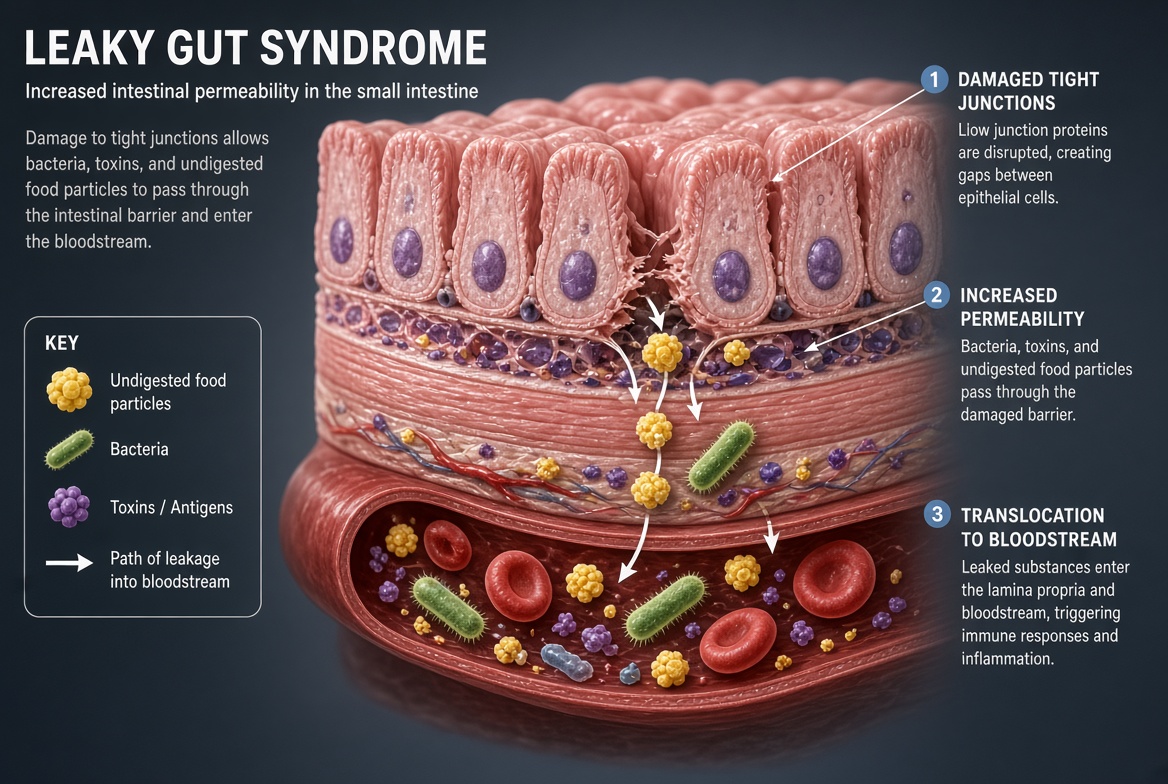
Your gut lining is made up of a single layer of cells held together by microscopic gatekeepers known as “tight junctions” — these determine what enters your bloodstream and what stays out.
When these junctions become loose, larger molecules like undigested food particles, toxins, and bacteria can pass into the bloodstream. Scientists and doctors refer to this chronic increase in intestinal permeability as “leaky gut.”
This process can trigger inflammation and an immune response, which is why leaky gut is often linked to symptoms like bloating, fatigue, and skin issues.
What Causes Leaky Gut?
Understanding what causes leaky gut is the first real step toward fixing it. Nutrition scientists have identified several exogenous (external) factors that influence how tight or loose your intestinal barrier becomes.
Alcohol directly damages tight junction proteins, and disrupted sleep prevents the gut lining from repairing itself overnight, compounding the problem day after day.
What Are Leaky Gut Symptoms?
Leaky gut doesn’t have distinct symptoms of its own — they overlap with common digestive issues, which is why many people don’t even notice them. The symptoms believed to be associated with leaky gut syndrome include:
- Persistent bloating, gas, or stomach cramps after meals — Leaky gut can lead to bloating, constipation, diarrhea, and similar issues.
- Food intolerance — The body can’t properly absorb the nutrients it needs, which leads to chronic fatigue.
- A burning sensation in the gut
- Itchy, reddened skin — this can even manifest as eczema, acne, and rashes.
- Increased food allergies
- Possible mood disorders
- Headaches
- Weakened immune system
- Fatigue and brain fog even after adequate sleep
- Reduced attention/focus
- Joint pain
On the other hand, research has linked increased intestinal permeability with visceral (abdominal) fat and liver fat accumulation, which raises the risk of broader metabolic problems like insulin resistance. If you notice these kinds of issues, consult a doctor promptly — they can help you find the right solution.
How to Cure Leaky Gut Naturally: Step-by-Step
Here’s the practical part. These are the most evidence-supported, natural strategies for repairing and protecting your gut lining.
Steps to Support Gut Health
1. Prioritize Fiber-Rich, Whole Foods
Fiber acts as food for beneficial gut bacteria. Instead of ultra-processed snacks, include more vegetables and fruits in your diet.
2. Add Fermented and Probiotic Foods to Your Diet
Yogurt, kefir, sauerkraut, kimchi, and miso contain live beneficial bacteria that can help restore balance to the gut microbiome.
3. Reduce Alcohol and NSAID Use
Both can damage the gut lining, so cutting back on their use can be an effective step toward keeping the intestinal barrier healthy.
4. Manage Stress Mindfully
Spend at least 10 minutes daily on breathing exercises, walking, journaling, reading, or engaging in activities you enjoy. Over time, this can help lower cortisol levels. So make an effort every day to stay free from mental stress.
5. Get Regular and Adequate Sleep
Try to sleep 7–9 hours each night. During sleep, various restorative processes in the body remain active.
6. Consider Bone Broth and Collagen-Rich Foods
Many functional-nutrition experts recommend bone broth and collagen peptides. These contain amino acids like glycine and glutamine, which may support the structure of the gut lining. However, large-scale human research on this is still limited.
7. Stay Well-Hydrated and Reduce Excess Sugar
Excess sugar can destroy beneficial gut bacteria and increase the influence of harmful microbes. So avoid sugary drinks and drink water instead — you can also have fruit juice. This may seem like a small change, but it can be beneficial in the long run
These are general, safe tips for gut health — not proven treatments specifically for “leaky gut” . If you have persistent stomach issues, it’s best to consult a doctor or gastroenterologist.
A Real-World Example
Consider a 2021 observational study that recruited healthy adults, split into metabolically healthy and unhealthy groups. Researchers found that while baseline gut permeability didn’t directly correlate with metabolic health, leaky-gut-related biomarkers did show significant correlations with metabolic health parameters. This tells us gut-barrier health and metabolic health are intertwined in ways that go beyond simple digestion — reinforcing why lifestyle changes matter even before symptoms feel severe.
Final Thoughts
Learning how to heal leaky gut naturally isn’t a short-term thing — it’s an ongoing, habit-based process: more fiber, less alcohol, better sleep, and real stress management all need to be maintained together. Research is still ongoing, but the direction is clear: what you eat and how you live directly shapes your gut barrier.
If symptoms are persistent or severe, pair these natural strategies with guidance from a licensed healthcare provider rather than self-diagnosing.
FAQs: People Also Ask
1. What is leaky gut, in simple terms? It’s a state where the intestinal lining becomes more permeable than normal, allowing larger particles like toxins and undigested food fragments to pass into the bloodstream more easily than they should.
2. What causes leaky gut the most? Poor diet, insufficient sleep, chronic stress, frequent NSAID use, alcohol, and an imbalanced gut microbiome are the most commonly cited contributing factors in current research.
3. What are the earliest leaky gut symptoms to watch for? Bloating, food sensitivities, fatigue, and skin flare-ups are typically the earliest and most common signs people notice.
4. How to cure leaky gut naturally without supplements? Focus on whole, fiber-rich foods, fermented foods, quality sleep, stress reduction, and cutting back on alcohol and processed sugar — no supplements required to start.
5. How long does it take to heal a leaky gut naturally? Most people notice initial improvements within 4–8 weeks of consistent dietary and lifestyle changes, though full microbiome and barrier recovery can take several months.
This article is for informational purposes only and is not a substitute for professional medical advice. If you’re experiencing persistent digestive symptoms, consult a licensed healthcare provider.