In modern life, social media, mobile phones, and computers keep us constantly occupied. Nonstop scrolling keeps the brain in a continuous state of stimulation, which is steadily damaging our focus, mental health, and brain function. A dopamine reset could be exactly the solution your brain needs. In this guide, we’ll break down what dopamine actually is, why modern life puts it under excessive pressure, and how a dopamine reset can help you feel motivated, focused, and present again.
This isn’t a fad diet or a 24-hour detox gimmick. A dopamine reset is a science-backed approach to recalibrating your brain’s reward circuitry so everyday pleasures — a walk, a conversation, a good meal — feel satisfying again, instead of dull compared to your phone.
What Is Dopamine?
Dopamine is a type of messenger chemical in the brain. It encourages us to learn, pay attention, and take action.”
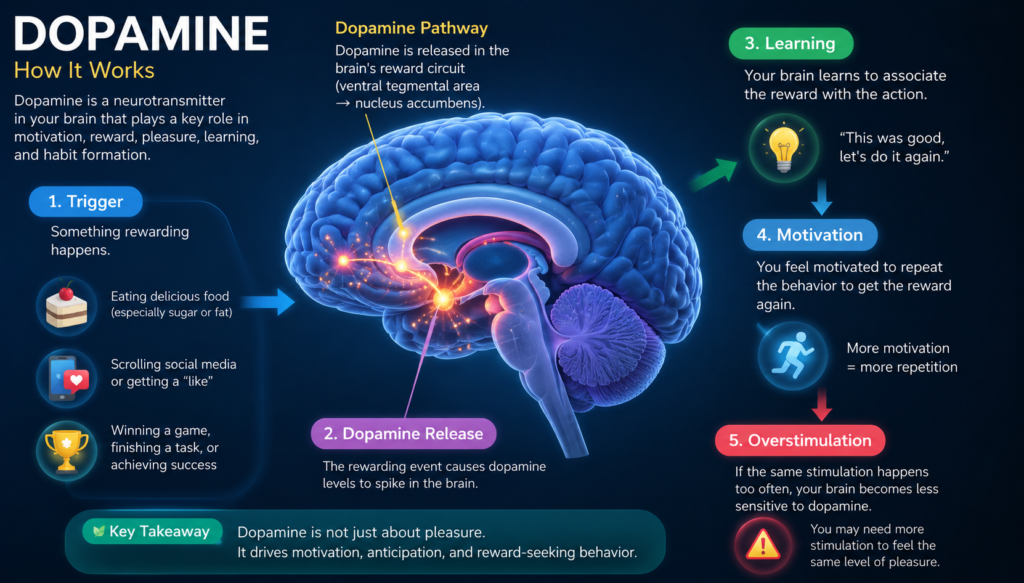
Dopamine is a neurotransmitter — a chemical messenger that carries signals between nerve cells in your brain. It’s often called the ‘feel-good’ chemical. Dopamine itself isn’t bad — it’s essential for growth. The problem starts only when the brain is continuously exposed to high-dopamine triggers, which can destroy our mental peace. Dopamine isn’t actually just about pleasure — it’s about motivation and anticipation.”
How Does Dopamine Work?
Dopamine works like a messaging system. When you do something pleasurable, dopamine is released and binds to receptors on nearby neurons, creating a signal of pleasure or motivation.
When Is Dopamine Released?
Dopamine is released continuously throughout the day, but its levels spike suddenly due to certain events or actions:
- Eating delicious food (especially sugar or fat)
- Scrolling social media or getting a “like”
- Winning a game, finishing a task, or achieving any success
These quick spikes feel rewarding in the moment, but relying on them too often can make everyday, low-stimulation activities feel less satisfying over time.
What Is Dopamine Addiction?
Dopamine addiction is becoming dependent on dopamine-triggering activities like social media, gaming, gambling, or junk foods. When someone starts these activities, dopamine release in the brain instantly creates a good feeling. So, to get that same good feeling again, a person becomes increasingly dependent — whether it’s gaming, gambling, mobile use, or substances — and becomes eager to chase an even bigger hit of that good feeling.”
Low Dopamine Symptoms
Doctors note these symptoms overlap with several conditions, including depression and ADHD, so persistent symptoms deserve a real medical evaluation rather than self-diagnosis.
Dopamine Withdrawal Symptoms
If you cut back sharply on a dopamine-heavy habit — social media, sugar, gaming, or a stimulant — you may feel worse before you feel better. Common dopamine withdrawal symptoms include:
- Irritability or restlessness
- Anxiety or low mood
- Intense cravings for the removed stimulus
- Trouble concentrating
- Sleep disruption
- Fatigue or low energy
These symptoms are usually temporary, often peaking within the first few days of a dopamine reset and easing within one to two weeks as your reward system recalibrates. Research on prolonged fasting and mood changes notes that abrupt, extreme restriction can spike anxiety in vulnerable individuals, so a gradual approach is safer than an all-or-nothing detox.
How to Naturally Increase Dopamine (The Dopamine Reset Method)
We all want to live happily, but the sky of our minds can change colors. Sometimes we feel joy, and sometimes we experience sadness. Although the ways to naturally support dopamine levels are quite simple, making healthy and positive lifestyle changes can help support a more balanced mood and reward system. Dopamine is a key neurotransmitter tied to motivation and mood — Cleveland Clinic explains its role in the brain’s reward system in detail. You can naturally support healthy dopamine levels through exercise, sleep, sunlight exposure, and mindful reduction of screen time. This is the core of any effective dopamine reset:
1. Reduce High-Stimulation Triggers First
Identify your biggest dopamine drains, such as social media, junk food, or gaming. You do not need to eliminate them forever, but taking a structured 24–72-hour break and making healthier habits can help you change these patterns.
2. Get Morning Sunlight and Move Your Body
Spending time in sunlight within an hour of waking can support healthy dopamine and serotonin regulation. Regular exercise can also support dopamine activity. Whether you prefer light or intense exercise, even a 20-minute walk can be beneficial. Physical activity and movement can help promote the release of dopamine and improve overall well-being.
3. Prioritize Protein-Rich and Healthy Foods
Include foods such as eggs, fish, poultry, and legumes regularly in your diet. These foods provide nutrients needed for natural dopamine production. Try to develop a preference for healthier foods rather than regularly eating foods that may be enjoyable but are not good for your health.
4. Maintain a Consistent Sleep Schedule
Poor sleep can affect how you feel the next day. You may feel tired, irritable, or low on energy, making it harder to stay productive. Try to maintain a consistent sleep schedule and reduce screen exposure before bedtime. Even small changes to your nighttime routine can support better sleep.
5. Practice Boredom and Spend Time Away From Your Phone
Make a habit of spending some time without your phone. Scrolling through social media may provide a temporary feeling of pleasure, but that feeling usually does not last long. Instead, develop the habit of reading books, even if you can only spend a little time reading each day. Reading can provide a more meaningful and lasting sense of enjoyment.
6. Use Cold Exposure and Mindfulness Strategically
Cold showers and mindfulness practices may support healthy dopamine regulation. Mindfulness can also help you become more aware of your thoughts, emotions, and cravings.
7. Focus on Progress, Not Perfection
A dopamine reset does not mean giving up everything permanently. It is more about periodically creating healthier habits and bringing more balance to your brain’s reward system. Instead of aiming for perfection, focus on making consistent progress.
8. Nurture Your Relationships
Take care of your personal, family, and social relationships. Feeling safe, supported, and connected in your relationships can contribute to emotional well-being and a healthier reward system.
9. Spend Time in Nature
Make time to connect with nature. Spending time outdoors and enjoying natural surroundings can improve your mood, reduce stress, and support overall mental well-being. Spending time with pets is another simple way to naturally support your mood.
10. Set Meaningful Goals
Set clear and meaningful goals for yourself. Choose something you genuinely want to accomplish and create a target that motivates you to finish it. You can set goals for the week, month, or even the year. Working toward meaningful goals can give you a sense of purpose, progress, and satisfaction.
A dopamine reset isn’t about permanent abstinence. It’s a periodic recalibration — many people find a structured reset once every few months keeps their baseline sensitivity healthy.
A Quick Real-World Example
Consider a college student who spends 6+ hours daily on short-form video. After committing to a two-week dopamine reset — replacing scrolling with walks, reading, and earlier sleep — many report improved focus and mood within the first week, consistent with findings linking reduced screen time to better sleep and emotional regulation. Individual results vary, and severe or persistent symptoms should always be discussed with a doctor.
Who Should Try a Dopamine Reset?
- Students struggling with focus during study sessions
- Entrepreneurs and professionals dealing with burnout or decision fatigue
- Teachers and healthcare workers managing chronic stress and screen fatigue
- Parents looking to model healthier habits at home
- Anyone feeling emotionally flat, distracted, or dependent on their phone
If you have a diagnosed mental health condition, always consult a doctor before making major behavioral changes.
Final Thoughts
A dopamine reset does not mean depriving yourself of pleasure. It is about giving your brain’s reward system a chance to regain its normal sensitivity. Small, consistent changes, such as sunlight, exercise, protein, sleep, and intentional boredom, are far more effective than any extreme 24-hour detox.
Start small, observe how you feel, and treat it as an ongoing habit rather than a one-time solution.
Frequently Asked Questions
1. How long does a dopamine reset take to work? Most people notice initial changes in mood and focus within 3–7 days, though full recalibration of receptor sensitivity can take several weeks of consistent habits.
2. What are the first signs a dopamine reset is working? Improved sleep quality, less craving for your phone, more patience with slower tasks, and steadier mood are common early signs.
3. Can you do a dopamine reset every day? No — most experts recommend periodic resets (a day, weekend, or a couple of weeks) rather than daily extreme restriction, which can backfire and increase anxiety.
4. Is dopamine fasting the same as a dopamine reset? They’re closely related terms. “Dopamine fasting” usually refers to a short, structured abstinence period, while “dopamine reset” often describes the broader lifestyle process of restoring healthy dopamine sensitivity.
5. Can low dopamine cause depression? Dopamine dysfunction is linked to some depressive symptoms, particularly low motivation and anhedonia, but depression is complex and involves multiple neurotransmitters — a doctor should evaluate persistent symptoms.
This article is for informational purposes only and is not a substitute for professional medical advice. Speak with a healthcare provider before making significant changes to your habits, especially if you have a diagnosed condition.