If you suffer from bloating, discomfort, or irregular bowel movements, finding effective constipation relief can feel urgent for many people. Whether you are a busy professional in the United States, a parent, or anyone who pays attention to daily health—the good news is that in most cases, simple evidence-based changes like fiber-rich foods, adequate water intake, and regular exercise are quite effective. This guide explains what constipation is, its main causes and symptoms, proven ways to relieve it, foods to limit, and necessary treatment options in simple language, so you can feel better and more comfortable quickly.
What Is Constipation?
Constipation means having fewer than three bowel movements a week, or stools that are hard, dry, lumpy, and difficult or painful to pass. Many people also feel like they have not fully emptied their bowels.
It is not a disease, but only a symptom. Some people go every day, while others go every few days—this is normal. The problem arises only when there is a noticeable change from your own usual pattern that causes straining or discomfort.
In the United States, about 16 out of every 100 adults experience this problem. Among those over 60 years of age, the number rises to about 33 out of 100. Research shows that women are affected nearly twice as often as men.
What Causes Constipation?
Causes of constipation: Several factors often work together. The most common ones are:
- Not getting enough fiber in the diet and not drinking enough fluids
- Reduced physical activity or sitting for long periods
- Certain medications (pain relievers, especially opioids, some antidepressants, iron supplements, and antacids containing aluminum or calcium)
- Ignoring the urge to have a bowel movement
- Sudden changes in routine, travel, or pregnancy
Medical conditions such as hypothyroidism, diabetes, irritable bowel syndrome with constipation (IBS-C), or neurological problems can also play a role. Psychological factors such as stress, anxiety, and depression can also affect bowel movements. In older adults, slower movement of the colon and weak pelvic floor muscles contribute to the problem. One population survey found that many people named “not enough fiber and too much junk food” or too little water as their main trigger.
Signs of Constipation
Common symptoms of constipation:
- Fewer than three bowel movements a week
- Straining or pain during bowel movements
- Hard or lumpy stools
- A feeling of incomplete emptying after a bowel movement
- Bloating, discomfort, or a feeling of fullness in the abdomen
See a doctor without delay if you have any of the following, as they can point to a more serious problem:
- Unexplained weight loss
- Severe abdominal pain
- Vomiting or fever
- Blood in the stool
- Symptoms lasting more than a few weeks, or a sudden major change in your bowel habits
How to Get Rid of Constipation? Lifestyle Approaches for Relief
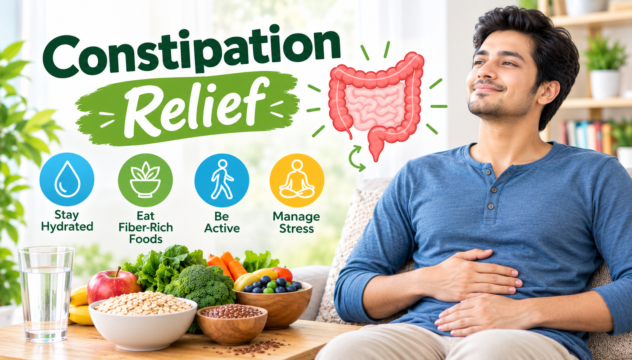
Most people achieve constipation relief through diet, fluids, movement, and better bathroom habits.
- Increase fiber slowly: Adults need about 22-34 grams of fiber a day (about 25 g for women and 38 g for men under 50). Eat fruits with the skin, vegetables, whole grains, beans and oats. To avoid gas and bloating, do not increase by more than 5 g per week.
- Drink plenty of fluids: Have enough water and caffeine-free drinks so fiber can keep stools soft. When the body is dehydrated, the colon pulls water from the stool and it becomes hard.
- Exercise regularly: Physical activity stimulates bowel contractions. Even a 20-30 minute walk each day helps many people.
- Build a toilet routine: Try to sit at the same time every day, ideally 15-45 minutes after a meal, when the bowel’s natural reflex is strongest. Do not hold back the urge to go.
- Fix your sitting posture: Rest your feet on a small stool so your knees are higher than your hips. This can make passing stool easier.
- Research support: According to a 2022 American Family Physician review, when there are no alarm symptoms, starting with adequate fluids, fiber and, if needed, an osmotic laxative often resolves constipation without further testing.
Foods to Avoid When Constipated
Foods to eat less of (they are low in fiber or slow down digestion)
- Refined grains: white bread, white rice, regular pasta, pastries
- Fatty and fried foods
- Processed meats and fast food
- Too much dairy, such as cheese and ice cream (not a problem for everyone, only for some people)
- Alcohol and too much caffeine, because they can cause dehydration
Foods to eat more of (rich in fiber)
- Fruits: berries, pears, apples with the skin, bananas, kiwi, prunes (dried plums)
- Vegetables: broccoli, leafy greens
- Grains and pulses: oats, lentils
- Seeds: chia seeds, flaxseeds
Two especially helpful foods
- Kiwi: Some studies have found that eating two green kiwis a day increases how often people pass stool and improves stool consistency.
- Prunes (dried plums): Some studies have shown similar benefits.
For sudden, acute constipation, a few lifestyle changes can bring constipation relief: eating more fiber, drinking enough water and staying physically active. For quick, short-term relief, over-the-counter laxatives, stool softeners and enemas can help.
A word of caution: before starting anything new, talk to a doctor or pharmacist, especially if you take other medicines or have any other health problems.
Act early: about half of Americans with constipation use some kind of medication, but many never tell a doctor. Dealing with it in good time can help you avoid complications such as hemorrhoids and fecal impaction (hardened stool that gets stuck).
Putting It All Together for Lasting
- Start with the basics: more fiber and fluids, daily physical activity, and a regular toilet routine.
- For one to two weeks, note what you eat and how your body responds. Many people see improvement within a few days to two weeks.
- If symptoms last more than two weeks, or you notice any red-flag signs (such as blood in the stool, unexplained weight loss or severe abdominal pain), book an appointment with your primary care doctor or a gastroenterologist. They can rule out other causes and make a plan that suits you.
- These steps match current clinical guidance from sources such as NIDDK, the American College of Gastroenterology and American Family Physician.
Frequently Asked Questions
How long does it take to get constipation relief?
Most people notice improvement from diet and lifestyle changes within a few days to two weeks. Osmotic laxatives such as polyethylene glycol often work within 1–3 days.
What is the fastest way to relieve constipation at home?
In mild cases, drinking extra water, taking an osmotic laxative such as MiraLAX, eating prunes or kiwi, and walking can give relatively quick relief. If needed, glycerin suppositories or enemas can work fast, but use them sparingly.
Can stress cause constipation?
Yes, stress can make constipation worse. Because of the communication between the brain and the gut, stress can slow down bowel movement. Stress also changes many people’s eating and activity habits, which can make the problem worse.
Is it safe to take laxatives every day?
Bulk-forming fibers and osmotic laxatives such as polyethylene glycol are generally safe for long-term use when taken as directed. Stimulant laxatives are best kept for occasional use, to avoid dependence or electrolyte problems.