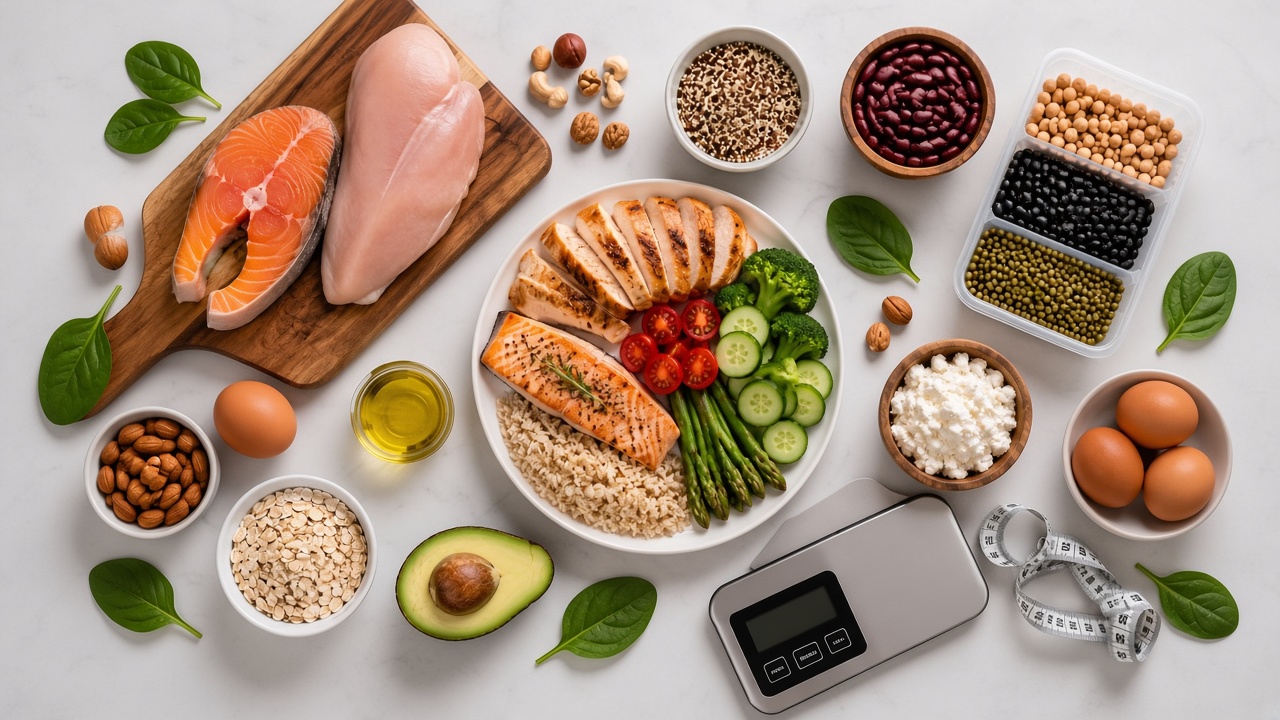
Learning how to count macros for beginners is one of the most practical ways to take control of your nutrition — whether your goal is fat loss, muscle gain, or simply feeling better every day. This guide explains everything step by step in simple language, so that health-conscious men and women in the United States can start with confidence.
What Are Macros? What Are Macros in Food?
Macros are the three nutrients your body needs in large amounts: they provide your body with energy in the form of calories. These are protein, carbohydrates, and fat. Every food contains some combination of these.
Protein builds and repairs muscle, supports hormones, and keeps you feeling full. Good sources include chicken, fish, eggs, Greek yogurt, cottage cheese, beans, and tofu.
Carbohydrates are your body’s preferred energy source for the brain and exercise. Besides providing energy, carb-rich foods are also high in fiber, which improves our digestion. Examples include oats, rice, potatoes, fruit, vegetables, and whole grains.
Fat supports hormone production, boosts our body’s immune function, helps absorb vitamins A, D, E, and K, and adds satisfaction to meals. Examples include avocado, nuts, olive oil, fatty fish, and seeds.
Most whole foods contain more than one macronutrient.
Nutrition Macros for Weight Loss
When the goal is fat loss, higher protein usually helps the most. Research shows that eating around 0.7–1.0 grams of protein per pound of body weight (or goal weight if you have significant weight to lose) helps preserve muscle while in a calorie deficit. A common starting split for weight loss is roughly 30–40% protein, 30–40% carbs, and 20–30% fat.
A moderate calorie deficit of 300–500 calories below your maintenance level typically produces steady loss of 0.5–1 pound per week. Extreme cuts often backfire by slowing metabolism and increasing hunger. High-protein approaches have been linked in multiple studies to better satiety and improved body composition compared with lower-protein diets at the same calorie level.
How to Calculate Macros: Step-by-Step for Beginners
Follow these practical steps.
1. Estimate your daily calorie needs (TDEE)
Use the Mifflin-St Jeor equation or an online TDEE calculator to determine your overall calorie needs. Multiply your body weight (in pounds) by a number, depending on your goal:
- Moderate deficit (for weight loss): weight × 12–14
- Maintenance (to keep weight steady): weight × 14–16
- Very active/higher exercise levels: use an even higher multiplier
Example: If someone weighs 150 pounds —
- For weight loss: 150 × 12 = 1800 to 150 × 14 = 2100 calories/day
- For maintenance: 150 × 14 = 2100 to 150 × 16 = 2400 calories/day
2. Choose your macro ratio based on goals
Weight/Fat Loss
Option A: 40% of total calories from protein, 30% from carbohydrates, 30% from fat. Since protein helps prevent muscle loss and keeps you feeling full (satiety) while cutting calories, protein is kept relatively higher.
Muscle Gain (Bulking)
Protein 30%, carbohydrates 40–50%, fat 20–25%. Here the carbohydrate ratio is kept higher because heavy workouts require energy, and it’s easier to create an overall calorie surplus this way.
Maintenance / General Health
Following the USDA’s “Acceptable Macronutrient Distribution Range (AMDR)”:
- Protein: 10–35%
- Carbohydrates: 45–65%
- Fat: 20–35%
This is a broad, safe range — if there’s no specific goal (cutting/bulking), staying within this range is sufficient for general health.
3. Convert percentages into grams
Multiply total calories by the percentage, then divide by 4 for protein and carbs or by 9 for fat.
Real example Moly is 150 pounds, moderately active, and wants to lose fat.
Estimated TDEE ≈ 2,100 calories. She sets a 400-calorie deficit → 1,700 calories.
Protein: 150g (1g per pound) = 600 calories
Fat: 50g (about 0.33g per pound) = 450 calories
Remaining calories for carbs: 1,700 – 600 – 450 = 650 → 162g carbs.
Daily targets: 150g protein / 162g carbs / 50g fat.
Another quick example for a 180-pound man aiming for maintenance at 2,400 calories with a 30/40/30 split: protein 180g, carbs 240g, fat 80g.
4. Track consistently
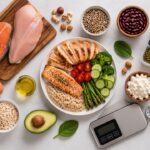
Use a free app such as MyFitnessPal, Cronometer or Lose It!. Weigh food with a cheap digital kitchen scale for the first few weeks—people commonly underestimate portions by 20–50% without one. After that, hand estimates (palm of protein, fist of carbs, thumb of fat) work surprisingly well for many.
5. Adjust every 2–4 weeks
Weigh yourself weekly under the same conditions. If progress stalls for two weeks and you’re hitting targets, drop calories by 100–200 or slightly raise protein. Consistency over weeks beats daily perfection. Staying within 5–10 grams of each target is usually close enough.
Practical Tips for Counting Macros as a Beginner
If the whole process feels overwhelming all at once, start by focusing on just protein in the first week. Build your meals around a protein source first, then add carbohydrates and fat.
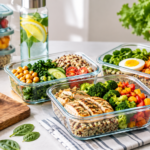
Log your meals in advance when possible. Batch-cook protein and carbs on the weekend. When eating out, check the restaurant’s nutrition info online, or estimate: grilled protein + a fistful of carbs + visible fat/oil.
Many people only measure their main foods (like rice, meat, vegetables) when calculating macros, but they forget to count cooking oil, butter, sauces (ketchup, mayonnaise), or sugary drinks (sugar in tea/coffee, soft drinks, juice). Yet these also carry plenty of calories and fat/carbs.
Some people make such strict rules for themselves that when they can’t stick to them, they get discouraged and give up on the whole plan. If you want, you can still eat pizza or ice cream — as long as it fits within your daily macro budget. This reduces the mental stress around food and makes it easier to stay consistent in the long run.
Sample Day for a 1,700-Calorie Fat-Loss Macro Plan (≈150P / 160C / 50F)
– Breakfast: 1 cup nonfat Greek yogurt + ½ cup berries + 1 tbsp peanut butter + 1 scoop protein powder if needed.
– Lunch: 5 oz grilled chicken, 1 cup cooked rice, large mixed salad with 1 tsp olive oil.
– Snack: Apple + low-fat string cheese or cottage cheese.
– Dinner: 5 oz salmon or lean turkey, roasted sweet potato, steamed broccoli with light seasoning.
– Optional evening: Casein pudding or Greek yogurt if protein is short.
This style of eating keeps hunger manageable while hitting numbers.
Tracking apps and a food scale remove most of the guesswork. Many users report better awareness of portion sizes within the first 10–14 days. Studies on mobile health apps show that frequent self-monitoring of weight, exercise, and intake is associated with greater likelihood of achieving a meaningful 5% body-weight reduction.
Putting It All Together and Staying Consistent
How to count macros for beginner success comes down to three habits: calculate realistic targets, track with reasonable accuracy, and adjust based on real results rather than the scale alone. Measure progress with photos, how clothes fit, energy levels, and strength in the gym as well as body weight.
Men and women often need slightly different starting points due to differences in average muscle mass and hormones. Despite these differences, the core principles of macro tracking remain the same for everyone:
If you have any medical condition (such as thyroid issues, PCOS, etc.), are pregnant, or have a history of disordered eating, general rules may not apply to you. In these cases, it’s important to seek personalized advice from a registered dietitian or doctor, as they can provide guidance based on consideration of your individual health history.
With a few weeks of practice, counting macros becomes second nature and gives you flexibility that rigid diets rarely provide.
Frequently Asked Questions
What are macros in simple terms?
Macros are protein, carbohydrates, and fat—the three main nutrients that provide calories and support body functions. Tracking them means watching the grams of each you eat daily.
How do I calculate macros for weight loss?
Estimate calories needed for a moderate deficit, set protein at 0.7–1g per pound of body weight, allocate 20–30% of calories to fat, and fill the rest with carbs. Convert everything to grams using 4 calories per gram for protein/carbs and 9 for fat.
Do I need a food scale to count macros?
It is highly recommended at the start for accuracy. After a few weeks of practice, visual estimates or measuring cups become reliable for many people.
What is the best macro ratio for beginners?
A balanced starting point is 30% protein / 40% carbs / 30% fat, or higher protein (around 40%) if fat loss is the main goal. Adjust based on energy, hunger, and progress.
Can I still eat my favorite foods while counting macros?
Yes. Flexible approaches allow any food as long as it fits your daily protein, carb, and fat targets. This is one reason many people stick with macro tracking longer than restrictive diets.