A detailed, practical intermittent fasting schedule that fits real life can help you reach your goals. Americans—health-conscious men and women alike—are turning to intermittent fasting for weight control and to improve their body’s metabolism. In this guide, we break down what it is, the schedules, how to do it correctly, and practical tips, so you can decide whether it should be part of your routine.
What Is Intermittent Fasting?
Intermittent fasting means going without food for a certain stretch of time — that could mean not eating on a few days of the week, or not eating for several hours of the day. In this approach, you must abstain from calorie intake during a specific window of the day or night. This isn’t really a conventional diet chart at all, but rather a specific rule or pattern for eating. When you confine your eating to a limited window, your overall calorie intake naturally drops, and you lose weight. With this method, you eat normally during your set eating window, but you extend the gap between two eating periods. Various recent reviews have found that this has become one of the most popular and most widely followed diet methods in the United States.
Typically, after going without food for about 12 hours, the body starts burning stored fat for fuel instead of using glucose. This metabolic shift in the body is the main subject researchers explore when looking into the various potential benefits of intermittent fasting.
Benefits of Fasting: What the Research Shows
Intermittent fasting is a specific rule or pattern of eating. The emphasis here is more on “when to eat” than “what to eat.” A large 2025 network meta-analysis of 99 randomized trials published in The BMJ found that various intermittent fasting approaches reduced body weight compared to unrestricted eating. Alternate-day fasting showed a slight edge over continuous calorie restriction in smaller studies (about 1.3 kg greater average weight loss). An umbrella review found that time-restricted eating is associated with fat loss and improved glycemic measures in overweight adults. Johns Hopkins research has found that, in controlled settings, intermittent fasting may have potential positive effects on certain markers of brain function and heart health, though results vary from person to person depending on adherence, their health status, and the specific schedule used.
Different Intermittent Fasting Schedules
Several popular patterns exist. Here are the main ones people follow:
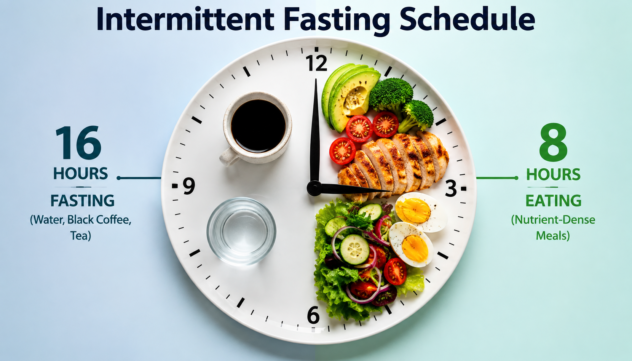
16/8 Time-Restricted Eating Fast for 16 hours and eat within an 8-hour window (for example, from 12 PM to 8 PM). This is often the easiest way to start, since most of the fasting happens overnight. You can gradually increase the fasting time further, to 18/6.
5:2 Method Eat normally for five days a week. On the other 2 days (with at least one day gap in between — for example, you could do Monday and Thursday), restrict calories significantly, to about 500–600 calories. Since you can eat normally most days, this feels easier to many people than daily restriction. But by the end of the week, total calorie intake goes down — creating a weekly energy deficit without any daily restriction.
Alternate-Day Fasting (ADF or Modified ADF) Eat normally one day, then fast or eat very little (around 500 calories or less) the next day. This alternates continuously — an eating day, then a low-calorie day, then an eating day again…
- Full ADF — eating nothing at all on fasting days, or only water. This is quite strict.
- Modified ADF — instead of eating nothing on fasting days, eating a small amount (around 500 calories). This is relatively easier to follow, so most people choose this version.
Since every other day is a low-calorie day, ADF requires cutting back 3–4 days a week, making it comparatively stricter.
Other Options
Eat-Stop-Eat
Doing one or two complete 24-hour fasts per week. For example, not eating from tonight’s dinner until tomorrow night’s dinner. Normal eating is allowed on the other days.
OMAD (One Meal A Day)
Eating only one meal a day, fasting for almost the remaining 23 hours.
Early Time-Restricted Eating (Early TRE)
Finishing food intake early in the day — for example, eating between 9 AM and 5 PM, then not eating anything at night. Some studies have shown that eating this way provides extra benefits for blood sugar control and body fat reduction, compared to eating later in the day.
What Is a Good Intermittent Fasting Schedule?
The best intermittent fasting schedule is the one you can follow consistently while meeting your nutritional needs. Consistency is important.
For beginners, start with a 12/12 or 14/10 window, and if you find you can do it comfortably, gradually increase the fasting time. Many people find 16/8 practical for work and social life. Those who prefer a weekly structure often choose 5:2.
Things to consider:
- You need to be mindful of your daily routine and home-cooked meals.
- You need enough energy for exercise or work.
- Any medical conditions (consult a doctor first).
- Consistency needs to be maintained.
Research consistently shows that schedules which create a sustainable calorie deficit are similarly effective for weight loss.
How to Properly Do Intermittent Fasting
Success requires more than just willpower — it needs preparation and smart habits.
- Choose a starting schedule and stick with it for at least two weeks before adjusting.
- Stay hydrated. During fasting periods, you can generally drink water, black coffee, and sugar-free tea.
- During your eating window, prioritize nutrient-dense foods — protein, vegetables, healthy fats, and fiber-rich foods. These help with satiety and preserving muscle.
- Listen to your body’s signals and pay attention to them. Mild hunger at first is normal, but pay attention if you experience dizziness or extreme fatigue.
- Pay attention to how you’re feeling — sleep, energy levels, whether things feel okay — and (if applicable) track your weight or measurements.
- When possible, combine fasting with strength training. Some studies show that including resistance exercise leads to better body composition results.
- If you have a long-term medical condition, you must consult a specialist doctor before making such dietary changes — especially if you take medication or have diabetes.
A practical example
Sofi is a 42-year-old working professional, began with 14/10 (eating 9 a.m.–7 p.m.). After three weeks she shifted to 16/8 (11 a.m.–7 p.m.). Combined with higher-protein meals and walking, she lost about 5% of her body weight over three months while reporting steadier afternoon energy. Results like this are common when the approach is sustainable, though individual outcomes differ.
Important Safety Considerations
Intermittent fasting isn’t suitable for everyone. Avoid it if you are pregnant or breastfeeding, under 18, underweight, or have certain medical conditions (people with diabetes, high blood pressure, heart failure, or other long-term illnesses should not do intermittent fasting). Side effects may include temporary headaches, irritability, fatigue, or changes in sleep. Older adults especially should be cautious about preserving muscle mass.
According to Mayo Clinic, while intermittent fasting has been shown to improve some health markers in the short term, research into its long-term effects is still ongoing. One review, based on observational data, found that people who ate within a window of less than eight hours a day were reported to have a higher risk of dying from heart disease. Therefore, it’s important to consult a doctor before starting intermittent fasting.
Final Thoughts
Intermittent fasting is an effective and safe way to lose weight, provided you don’t have any other underlying health conditions. An effective intermittent fasting schedule prioritizes consistency over perfection, which supports your health goals. Whether you choose 16/8, 5:2, or any other type, focus on overall diet quality, hydration, exercise, and how well the method fits into your life.
Start slowly, monitor how you feel, and adjust as needed. Instead of viewing it as a quick fix, integrate it into sustainable habits. Evaluate your results with your healthcare provider.
Frequently Asked Questions
What is the easiest intermittent fasting schedule for beginners?
Most beginners do well starting with 12/12 or 14/10 and progressing to 16/8 once it feels comfortable. These daily windows build the habit without extreme restriction.
How long does it take to see results from an intermittent fasting schedule?
Many people notice changes in energy or mild weight loss within 2–4 weeks. Clinical trials often measure meaningful differences at 8–12 weeks.
Can I exercise while following an intermittent fasting schedule?
Yes, it’s fine to do light exercise while fasting. It’s better to avoid exercising right at the very end of your fasting window (when it’s not yet time to eat).
Is intermittent fasting better than regular calorie restriction?
Most high-quality comparisons show similar weight-loss and metabolic results when calorie intake is comparable. For many people, it’s simple and easy to follow. This is why people can stick with it long-term.
Who should not try intermittent fasting?
Pregnant or breastfeeding individuals, people with diabetes, high blood pressure, heart failure, or other long-term illnesses should not do intermittent fasting, should avoid it or only attempt it under close medical supervision.