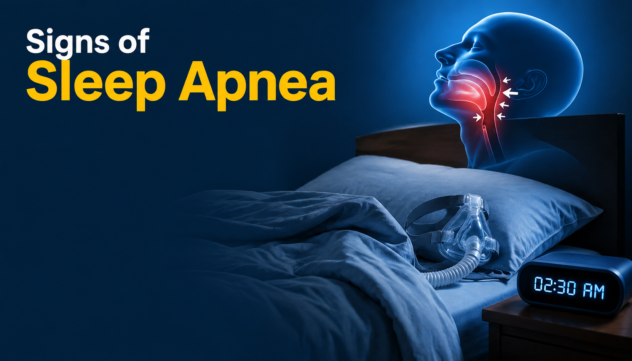
There is no substitute for adequate sleep for a healthy life. Recognizing the signs of sleep apnea early can make a difference in your body’s energy levels. At night, sleep is repeatedly interrupted, breathing is disrupted, and you feel drowsy all day. You can’t focus on work during the day. Sleep apnea actually has an adverse effect on every part of the body. It increases the risk of heart disease and other complications. Sleep apnea affects nearly one billion people worldwide aged 30 to 69. This guide breaks down the key details in clear and practical language so you can understand the risks and the next steps.
What Is Sleep Apnea?
Sleep apnea is a sleep-related disorder in which breathing repeatedly stops during sleep. This disrupts sleep. Breathing stops multiple times a night for a few seconds each time, because it briefly lowers oxygen levels. This stopping of breath is called apnea, and it disrupts sleep, even though you may not fully wake up. If left untreated in time, sleep apnea increases the risk of high blood pressure, heart disease, type 2 diabetes, stroke, and accidents caused by daytime fatigue. Many people don’t know they have this condition. It is often a partner or family member who first notices the nighttime symptoms.
Types of Sleep Apnea
There are three main types of sleep apnea, each with different underlying mechanisms.
Obstructive Sleep Apnea (OSA): This is by far the most common type, because these symptoms are more noticeable during sleep. While sleeping, the soft tissue in the throat relaxes and blocks the airway. The effort to breathe continues, but air cannot flow through freely. Most cases of sleep apnea are of this type. According to Mayo Clinic, common and early symptoms of sleep apnea include: loud, persistent snoring; pauses in breathing during sleep; waking up repeatedly at night; a feeling of gasping or choking during sleep; waking up with headaches; constant fatigue; mood swings or irritability; forgetfulness; dry mouth or sore throat in the morning; and restlessness.
Central Sleep Apnea (CSA) occurs when the brain fails to send proper signals to the muscles that control breathing. During the pause in breathing, there is very little or no effort to breathe. These symptoms are generally less common in CSA. It is often associated with heart failure, stroke, or certain medications such as opioids.
Complex or mixed sleep apnea (also called treatment-emergent central sleep apnea) combines features of both OSA and CSA. It sometimes appears after starting continuous positive airway pressure (CPAP) therapy for obstructive sleep apnea.
Understanding the type helps guide accurate diagnosis and treatment.
What Causes Sleep Apnea?
Several factors can contribute to the development of sleep apnea.
For example, in obstructive sleep apnea, the throat muscles relax during sleep and the airway narrows. Risk factors that increase the likelihood of this narrowing include:
Being overweight or obese, especially fat accumulation around the neck. Excess weight can cause fatty tissue to build up around the neck and throat, which can obstruct the airway during sleep.
A large neck circumference (roughly more than 17 inches in men or 16 inches in women)
Anatomical factors such as a receding jaw, enlarged tonsils, or a narrow airway
Increasing age, which reduces muscle tone
Having a family history of sleep apnea
Male sex (though the risk increases in women after menopause)
Smoking, drinking alcohol before bed, or sedative medications
Sleeping on your back
A history of heart conditions, such as atrial fibrillation or congestive heart failure
A real-world example
Many middle-aged adults with a BMI over 30 develop OSA because extra tissue narrows the airway when muscles relax at night. Weight loss of even 10% of body weight can significantly reduce the severity of breathing events for some people.
Signs of Sleep Apnea
Symptoms of sleep apnea appear both at night and during the day. Nighttime symptoms are often noticed by a bed partner, while daytime symptoms affect quality of life.
Common nighttime symptoms include:
- Loud, chronic snoring (seen in a high percentage of OSA cases, though not everyone who snores has apnea)
- Suddenly waking up with a feeling of choking
- Pauses in breathing, gasping, choking sensations in the throat, or wheezing sounds
- Frequent awakenings or restlessness
- Waking up multiple times to urinate (nocturia)
- Dry mouth or sore throat upon waking,
- Night sweats
It’s important to remember that not everyone with sleep apnea experiences the same symptoms, and this can vary from person to person.
- Daytime symptoms include:
- Excessive daytime sleepiness or fatigue even after a full night’s sleep
- Morning headaches
- Memory loss, difficulty concentrating, or brain fog
- Mood changes, symptoms of depression or anxiety
- In some men, reduced sexual desire or erectile dysfunction
Statistics highlight how common these problems are. Research estimates that in the United States, 33.9% of men and 17.4% of women in the U.S. have OSA (AHI >5), according to Peppard et al., as cited in a 2023 review published in Medicina journal. PMC. Globally, an estimated 936 million adults aged 30–69 have mild to severe obstructive sleep apnea, and 425 million have moderate to severe OSA. The number of affected individuals is highest in China, followed by the United States, Brazil, and India (Benjafield et al., Lancet Respiratory Medicine).
Consider a typical case
A 48-year-old man notices his wife complaining about his loud snoring and gasping. He feels exhausted every afternoon, struggles to focus at work, and has developed high blood pressure that is hard to control. A sleep study later confirms moderate OSA. After starting treatment, his energy and blood pressure both improve. Stories like this are common in clinical practice.
Women may present differently—more often with insomnia, fatigue, or morning headaches rather than classic loud snoring—so the condition can be overlooked.
How to Treat (and Manage) Sleep Apnea
There is no universal “cure” for sleep apnea, but effective treatment can manage the condition, restore restful sleep, and reduce associated health risks. The treatment approach depends on the type and severity.
For many people, lifestyle changes form the foundation:
- Losing weight if overweight
- Sleeping on your side instead of your back
- Avoiding alcohol and sedatives before bed
- Quitting smoking
- Treating nasal congestion
Positive Airway Pressure (PAP) therapy, commonly known as Continuous Positive Airway Pressure (CPAP), is a highly effective treatment for obstructive sleep apnea (OSA). In this treatment, you wear a mask over your nose or mouth during sleep, which delivers a continuous stream of air pressure to keep the airway open. It reduces snoring and normalizes breathing. Many patients experience improvements in energy and concentration within days to weeks of consistent use.
Other options include:
Oral appliances fitted by a dentist. These devices work by repositioning the jaw or tongue so the airway doesn’t collapse. They are recommended for people who cannot tolerate CPAP therapy.
Positional therapy devices
Upper airway surgery in selected cases (for example, removing enlarged tonsils or correcting anatomical issues, correcting nasal abnormalities, or repositioning the jaw)
Diagnosis usually starts with a medical history and physical exam, often followed by a home sleep apnea test or in-lab polysomnography. Screening tools like the STOP-BANG questionnaire can help flag people who need further evaluation.
Untreated sleep apnea carries real costs. Studies link it to higher rates of cardiovascular events, reduced workplace productivity, and increased accident risk. Proper treatment has been shown to improve blood pressure control, daytime alertness, and overall quality of life for many patients.
Important note: This article is for educational purposes only and is not a substitute for professional medical advice. If you suspect sleep apnea, talk with a healthcare provider. They can recommend appropriate testing and a personalized plan.
Frequently Asked Questions
What are the earliest signs of sleep apnea?
Loud snoring interrupted by silence or gasping, plus unexplained daytime fatigue, are among the most common early indicators. A partner’s observations are often the first clue.
Can you have sleep apnea without snoring?
Yes. Some people, especially women or those with central sleep apnea, have little or no snoring. Daytime sleepiness, morning headaches, and witnessed breathing pauses remain important signs.
Is sleep apnea dangerous if left untreated?
Yes. Long-term untreated sleep apnea increases the risk of high blood pressure, heart disease, stroke, type 2 diabetes, and accidents caused by excessive sleepiness.
How is sleep apnea diagnosed?
Doctors typically use a sleep study—either at home or in a lab—to measure breathing pauses, oxygen levels, and sleep stages. Questionnaires and a physical exam help determine who needs testing.
Can lifestyle changes alone fix mild sleep apnea?
For some people with mild obstructive sleep apnea, weight loss, side-sleeping, and avoiding alcohol near bedtime can meaningfully reduce symptoms. Moderate to severe cases usually need additional treatment such as CPAP.
Recognizing the signs of sleep apnea is the first step toward better sleep and better health. If several of the symptoms described here sound familiar, schedule a conversation with your doctor. Early action can restore energy, protect your heart, and improve daily life.