
In life, we face many worries, such as workplace stress, family troubles, financial strain, or concerns about the future, which can overload our nervous system. This can lead to anxiety, a racing heart, sleep problems, irritability, fatigue, and difficulty concentrating.
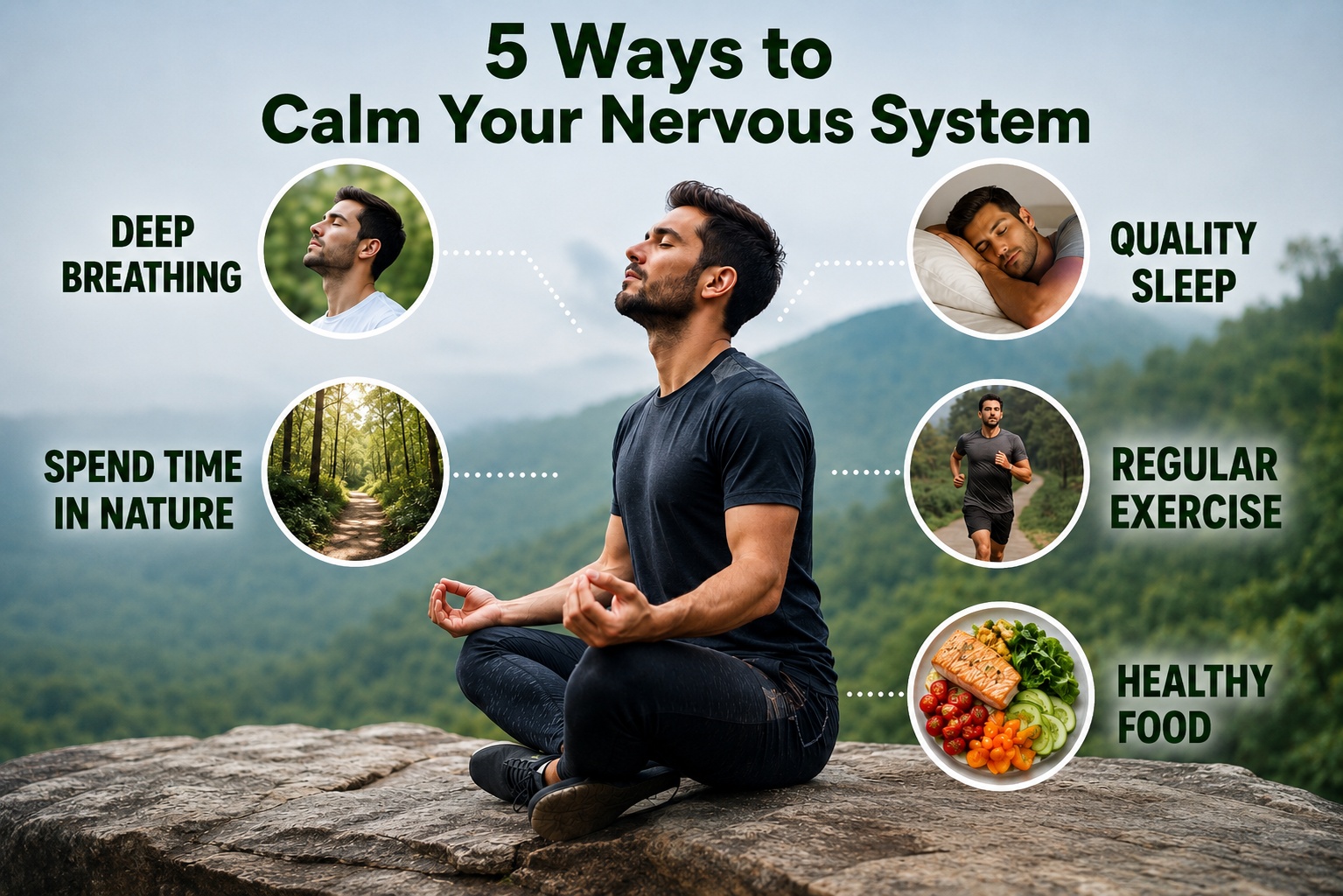
The good news is that with a few simple and effective habits, you can regulate or soothe your nervous system and significantly reduce stress. These 5 ways to calm your nervous system can help reduce stress and improve your overall well-being.
How to Calm Your Nervous System
1. Practice the Deep Breathing to calm your nervous system:
When we’re anxious, our breathing often becomes fast and shallow, our hearts pound, and we feel short of breath. Breathing slowly and deeply signals to the body to calm down. That’s why breathing exercises are so important to calm our nervous system.
A simple method is:
- Inhale for a count of 4 through your nose or mouth.
- Hold for a count of 4.
- Slowly exhale through your nose or mouth for 6 seconds.
Method 2:
Sit up straight on a sofa or chair with both hands on your knees. Inhale through your nose and exhale through your mouth. Do not hold your breath.
Practicing this 5-6 times a day can reduce stress and make your body feel more relaxed.
2. Exercise Regularly and Spend Time in Nature
Walking, jogging, yoga, or light exercise increases the release of endorphins, the “feel-good hormones.” This helps reduce anxiety and calm the mind.
Even a daily 30-minute walk can positively impact your nervous system. Especially walking in nature, barefoot on the grass. Walking on grass reduces the level of the stress hormone called cortisol in the body, which calms the mind and helps relieve mental stress and anxiety. Additionally, the green grass relieves eye strain. It increases physical and mental tranquility.
3. Ensure adequate and quality sleep
A lack of sleep makes the nervous system more sensitive. Insufficient sleep disrupts hormonal balance, which can lead to issues ranging from weight gain to depression. It can also cause excessive worry or irritability over minor matters.
- For better sleep:
Go to bed at the same time every day. Reduce your use of mobile phones, TVs, or computers at least an hour before going to bed.
Keep your bedroom quiet and comfortable.
Adults generally need 7-8 hours of sleep per day.
4. Get Enough Rest For Body and Mind
We often work all day long but don’t take even a few minutes for ourselves. Yet, taking a break is extremely important for mental health.
Some Effective Ways:
- Reading a favourite book, listening to light music
- Meditation
- Spending time with family and friends.
- Spending some time in nature
- Working on a hobby.Going for a walk.
- Even setting aside just 15-20 minutes a day for yourself can help reduce stress
5. Eat a healthy diet and drink enough water
Our eating habits also affect our nervous system. Excessive sugar, junk food, and too much caffeine can increase anxiety. We must have to be conscious about our food habits to control and calm our nervous system. Instead, include the following in your diet:
- Fresh fruits and vegetables
- Nuts and seeds
- Fish and protein-rich foods
- Plenty of water
- Foods rich in magnesium and omega-3s, in particular, can help support healthy nervous system function.
When should you see a doctor?
If you experience persistent anxiety, sleep problems, panic attacks, heart palpitations, or difficulty with daily activities, it is important to consult a doctor or a mental health professional.
Final Words
Stress and anxiety are a part of life; while it may not be possible to eliminate them, it is crucial to know how to manage them. Just as excessive stress can cause physical and mental harm, positive thinking can help boost our motivation for work. Taking some time for yourself can help keep your nervous system calm.
Taking care of your mental health is not a luxury; it should never be neglected. Awareness will help us overcome stress.