You can’t tell by looking at people with high-functioning depression what is going on inside them. They go to work, take care of their family, finish their work on time, and maintain relationships. Yet beneath that capable external appearance, they may constantly struggle with sadness, mental exhaustion, and a continuous feeling of emptiness. Research shows (Joseph et al., 2025) that people with high-functioning depression may appear normal outwardly while experiencing significant internal symptoms. When signs of high-functioning depression are noticed, you should take care of yourself.
High functioning depression is not an official medical diagnosis. Instead, it is a commonly used term to describe people who experience depressive symptoms while continuing to manage most of their daily responsibilities. Many people live with these symptoms for months or even years without realizing they need help.
Understanding the signs early can make a significant difference in recovery.
Signs of High Functioning Depression
What Is High Functioning Depression?
Explain that “high functioning depression” is not an official medical diagnosis but is commonly used to describe people who manage daily responsibilities while experiencing ongoing depressive symptoms. Mention its association with Persistent Depressive Disorder (PDD).
Many people hide these struggles behind a smile, making the condition difficult for others to recognize.
High Functioning Depression Symptoms
Expand beyond high functioning depression by covering symptoms recognized by healthcare professionals, including:
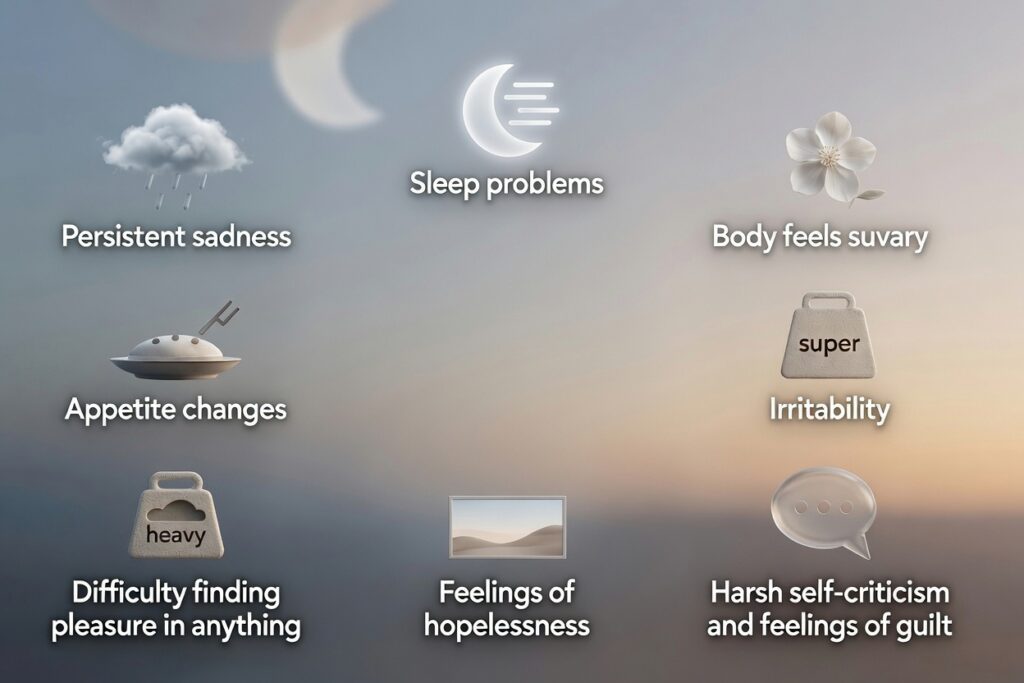
- Persistent sadness
- Sleep problems
- Appetite changes
- Difficulty finding pleasure in anything
- Irritability
- Feelings of hopelessness,
- Somedays body feels super heavy
- Loss of interest in activities
- Harsh self-criticism and feelings of guilt,
This section supports the previous one without repeating it.
How to Treat Functional Depression
Cover evidence-based treatments:
- Cognitive Behavioral Therapy (CBT)
- Other forms of psychotherapy
- Medication if needed
- Lifestyle changes
- Building a support system
Can Depression Be Treated Without Medication?
Explain that:
Mild cases may improve with therapy, exercise, healthy sleep, stress management, and social support.
Moderate or severe depression often requires medication in addition to therapy.
Treatment should always be individualized by a healthcare professional.
What Foods Are Good for Depression?
Discuss foods that support brain health:
- Fatty fish
- Leafy greens
- Berries
- Nuts and seeds
- Whole grains
- Beans and lentils
- Fermented foods
- Olive oil
Also mention limiting ultra-processed foods, excess sugar, and alcohol. These foods are only supportive — not a treatment for depression.
How Long Can Functional Depression Last?
Explain:
- Persistent depressive disorder lasts at least two years in adults.
- If left untreated, the symptoms can persist for years.
- Early intervention improves outcomes.
When Does Depression Hit the Most?
Explain that depression can occur at any age but often first develops during the late teens to early adulthood. Mention common triggers such as:
- Long-term stress
- A shock in life
- A major life change
- An illness
- Hormonal changes
- For some people, seasonal changes
When Should You Seek Professional Help?
Recommend seeking professional care if symptoms:
- If these symptoms last for more than two weeks
- They interfere with work or relationships
- They gradually get worse
- They cause feelings of despair or
- They lead to dangerous thoughts of self-harm or suicide
Conclusion
High-functioning depression is hard to notice. Even when everything looks fine on the outside, a person may be fighting a daily battle inside. It is not a weakness — it is a real condition. And it is treatable. Seeking help on time is not something to be ashamed of; it is a sign of strength.
No one is alone
If you notice these symptoms of high-functioning depression, consult a doctor as soon as possible. Please take care of yourself.