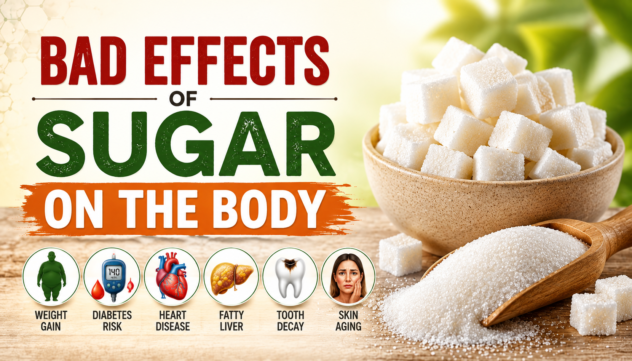
Sugar is a common ingredient used in many foods, but consuming too much sugar can have serious health effects. Sugar isn’t just in sweets and soft drinks; it’s also found in many packaged foods, sauces, cereals, and snacks.
Long-term excessive sugar consumption can lead to obesity, type 2 diabetes, heart disease, and many other illnesses.
In this article, you’ll learn Bad Effects of Sugar on the Body what happens when you eat too much sugar, why excessive sugar is harmful, its long-term effects, and simple ways to reduce your sugar intake naturally.
Bad Effects of Sugar on the Body: What You Need to Know
How Does Sugar Affect Your Body?
After consuming sugar, it very quickly converts into glucose and enters the bloodstream. From the blood, the necessary glucose enters the cells. The remaining glucose is stored as fat in various parts of the body. As a result, we feel hungry very quickly and eat again. By eating repeatedly in this way, we consume more calories that causes weight gain.
When you regularly consume large amounts of added sugar. Excess sugar causes repeated spikes in blood sugar and insulin levels, forcing your body to work harder to maintain balance.
Over time, this can lead to insulin resistance. As a result, blood sugar levels remain high, increasing the risk of developing type 2 diabetes and other chronic diseases.
Too much sugar can also affect your brain, liver, heart, skin, and digestive system, making it important to limit your daily intake.
What Happens When You Eat Too Much Sugar?

The effects of excessive sugar can appear both immediately and over time.
Sugary foods give you a temporary energy boost—because your blood sugar level rises quickly, you feel that surge of power. But afterward, your blood sugar level usually drops rapidly, leaving you feeling tired, hungry, and craving more sweets.
Other short-term effects include:
- Energy crashes and fatigue,
- Increased hunger and food cravings,
- Difficulty concentrating,
- Mood swings and irritability,
- Temporary bloating,
Frequently consuming sugary drinks, processed foods, junk foods, can also lead to overeating because these foods often do not keep you full for long.
Why Is Too Much Sugar Harmful?
Excess sugar adds calories to our body but doesn’t provide essential nutrients like vitamins, minerals, fiber, or protein. For this reason, it’s often called “empty calories.”
Excess sugar contributes to chronic inflammation, which is linked to many diseases. It can also increase triglyceride levels, raise blood pressure, and contribute to unhealthy cholesterol levels, all of which are risk factors for heart disease.
Corn syrup and table sugar contain large amounts of fructose, which is processed by the liver. When consumed in excess, fructose can be converted into fat, increasing the risk of non-alcoholic fatty liver disease.
Sugar also feeds harmful bacteria in the mouth, increasing acid production that weakens tooth enamel and causes cavities.
In addition, diets high in sugar have been associated with poor skin health, including acne and premature skin aging due to increased inflammation and damage to collagen.
Bad Effects of Sugar on the Body Over Time
Regularly consuming too much sugar may harmful for us and contribute to several long-term health conditions.
Weight Gain and Obesity
Excessive sugar intake doesn’t provide lasting satisfaction, making it easy to consume extra calories and gain weight. So Eating too much sugar will lead to weight gain.
Type 2 Diabetes
Obesity increases the risk of type 1 diabetes in children and type 2 diabetes in adults. It also raises the risk of other diseases.
Heart Disease
Research suggests that eating too much added sugar can raise triglyceride levels and contribute to unhealthy cholesterol changes. Over time, these changes may promote plaque buildup in the arteries, increasing the risk of heart disease, high blood pressure, and stroke.
Fatty Liver Disease
Excess fructose can accumulate as fat in the liver, increasing the risk of non-alcoholic fatty liver disease.
Tooth Decay
Sugar fuels bacteria that produce acids capable of damaging tooth enamel, leading to cavities and other dental problems.
Poor Skin Health
High sugar intake may accelerate skin aging by damaging collagen and elastin, the proteins responsible for keeping skin firm and healthy.
Increased Risk of Chronic Inflammation
Long-term inflammation is associated with conditions such as heart disease, arthritis, and certain metabolic disorders.
Mental Health Effects
Depression and Neurological Disorders
Excessive sugar consumption can lead to depression, Parkinson’s, and Alzheimer’s.
Some studies suggest that diets high in added sugar may be associated with a greater risk of depression and anxiety, although many other factors also influence mental health.
How to Reduce Sugar Intake Naturally
Reducing sugar doesn’t mean eliminating all sweet foods. Small, consistent changes can make a significant difference.
Here are some practical tips:
- Read food labels and watch for added sugars.
- Choose , milk, lemon water, cumin water, or plain coconut water, instead of sugary drinks.
- Eat more fruits instead of sweets.
- Include protein and fiber in every meal.
- Limit processed snacks, and choose yogurt instead of dessert.
- Try to cook your meals at home. Avoid eating fast food whenever possible.
- Choose plain, unsweetened varieties to avoid added sugars.
- Reduce the amount of sugar you add to tea or coffee gradually.
- Snack on nuts, seeds, or fresh fruit instead of candy.
These habits can help stabilize blood sugar, improve energy levels, and support long-term health.
Frequently Asked Questions
Is all sugar bad for you?
No. Natural sugars found in whole fruits, vegetables, and dairy products come with fiber, vitamins, and minerals. The main concern is consuming too much added sugar found in processed foods and sugary beverages.
How much sugar is safe daily?
According to the American Heart Association, women should limit added sugar to no more than 25 grams (6 teaspoons) per day, while men should aim for no more than 36 grams (9 teaspoons) per day.
Should You Completely Stop Eating Sugar?
There’s no need to avoid all sugar completely, because many healthy foods naturally contain sugar. Focus on reducing added sugar.
Conclusion
Understanding the bad effects of sugar on the body can help you make healthier food choices. While sugar itself is not the enemy, consuming too much added sugar over time can increase the risk of weight gain, type 2 diabetes, heart disease, fatty liver disease, tooth decay, and other chronic health problems.
Rather than cutting out sugar entirely, focus on reducing added sugars and choosing more whole, nutrient-rich foods.